
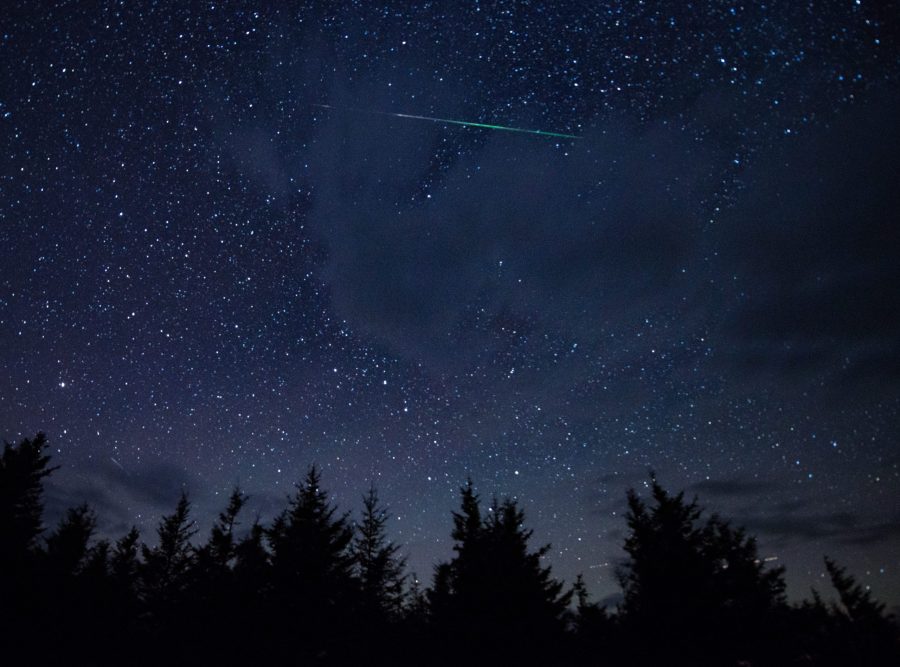



The Perseid meteor shower returns every summer, usually peaking around Aug. 12–13. The best viewing in Iowa and Illinois is typically after midnight from a dark location away from city lights.
Updated Sept. 24, 2026.
By Hola America News

IOWA AND ILLINOIS — The Perseid meteor shower returns to Iowa, Illinois and the rest of the Northern Hemisphere every summer, producing fast, bright meteors and occasional fireballs during the warm August nights.
The shower is generally active from mid-July through late August and usually reaches its strongest activity around Aug. 12–13.
For viewers in Iowa and Illinois, the best time to watch is typically after midnight through the hours before dawn, when the constellation Perseus rises higher in the northeastern sky and more meteors become visible.
No telescope or binoculars are needed. A dark location, a wide view of the sky and enough time for the eyes to adjust are more useful than magnification.


The Perseids usually peak around Aug. 12–13
The Perseids return at roughly the same time each year because Earth passes through a stream of dust and debris left by Comet 109P/Swift-Tuttle.
The shower is typically active from about July 17 through Aug. 24, with the strongest activity concentrated around Aug. 12 or 13.

The exact quality of the shower changes from year to year.
Cloud cover, moonlight, artificial lighting and the observer’s location can dramatically affect how many meteors are visible.
For 2027, the Perseids are expected to peak during the night of Aug. 12–13. A bright waxing gibbous Moon will interfere with viewing during part of the night, making faint meteors harder to see.
The best time to watch is after midnight
Perseid activity generally improves as the night progresses.
The radiant — the point in the sky from which the meteors appear to originate — is located near the constellation Perseus. It rises in the northeastern sky and climbs higher during the night.
Viewers do not need to stare directly at Perseus.
Meteors can streak across any part of the sky, so the best strategy is to find a location with a broad, unobstructed view and look generally overhead.
The period from midnight until dawn usually provides the strongest viewing because the radiant is higher and the observer’s side of Earth is rotating into the meteor stream.
How many Perseids can viewers actually see?
The Perseids are sometimes described as producing up to 100 meteors per hour, but that figure should not be interpreted as what every person will see.
The higher number is a standardized theoretical rate used to compare meteor showers under nearly ideal conditions.
For viewers at dark rural locations, the American Meteor Society says normal Perseid rates near maximum are often around 30 to 50 shower meteors per hour.
City lights, moonlight, haze, clouds, trees and buildings can substantially reduce that number.
A person watching from a brightly lit neighborhood may see only a fraction of the meteors visible from a dark rural location.
Moonlight can determine whether a Perseid year is especially good
The Moon is one of the biggest variables in meteor shower viewing.
A bright Moon washes out faint meteors in much the same way that streetlights do.
The 2026 Perseid peak offered unusually favorable conditions because it coincided with a new Moon, creating very dark skies where clouds stayed away.
Conditions will be different in 2027. A bright waxing gibbous Moon will be present around the Aug. 12–13 peak, reducing the number of faint meteors that can be seen.
The brightest Perseids and fireballs can still be visible even during moonlit years.
The Perseids come from Comet Swift-Tuttle
The Perseid meteor shower occurs when Earth passes through debris left behind by Comet 109P/Swift-Tuttle.
Tiny particles enter Earth’s atmosphere at approximately 37 miles per second and heat up rapidly, producing the streaks of light seen from the ground.
The meteors are called Perseids because their paths appear to trace back toward the constellation Perseus.
The shower is also known for producing fireballs — exceptionally bright meteors that can remain visible longer than ordinary streaks.
Where to watch the Perseids in Iowa
The best viewing locations have dark skies, an open view and legal access during the overnight hours.
Several Iowa parks and campgrounds can provide darker conditions than major cities, although overnight access and reservation rules vary.
Whiterock Conservancy’s Star Field Campground, near Coon Rapids, is specifically promoted for stargazing and offers hike-in campsites with dark nighttime views.
Pinicon Ridge Park, near Central City, offers multiple campgrounds and can provide an overnight option away from the lights of Cedar Rapids.
F.W. Kent Park, west of Iowa City, operates a seasonal campground.
Near the Quad Cities, Scott County Park also offers camping, although park gates are locked after closing and overnight access is intended for registered campers.
Visitors should check current campground hours, reservations and park rules before traveling. Day-use access does not necessarily allow visitors to remain inside a park during the strongest predawn viewing hours.
Viewers in cities should get away from direct lights
Leaving a major city can dramatically improve meteor visibility, but a long drive is not always necessary.
Even within Des Moines, Cedar Rapids, Iowa City, Davenport, Bettendorf, Moline or Rock Island, moving away from brightly illuminated streets, parking lots and buildings can improve the view.
The most important factors are:
- a wide view of the sky;
- limited artificial light;
- few trees or buildings blocking the horizon;
- clear weather;
- legal access during overnight hours.
Private farmland should not be used without the owner’s permission, and drivers should avoid stopping along unsafe rural roads.
Give your eyes about 30 minutes to adjust to the dark
Human eyes need time to become more sensitive in darkness.
Bright phone screens, headlights and flashlights can disrupt that adjustment.
Allow approximately 20 to 30 minutes in darkness before expecting to see the faintest meteors.
A reclining chair or blanket makes it easier to watch a large section of the sky without repeatedly looking in one direction.
Meteor activity also tends to come in bursts. Several meteors may appear within a few minutes, followed by a quiet period.
Watching for at least an hour usually provides a better chance than stepping outside briefly.
No telescope or special equipment is needed
The Perseids are best observed with the naked eye.
Telescopes and binoculars narrow the field of view and can make it easier to miss meteors appearing elsewhere in the sky.
Useful items can include:
- a reclining chair or blanket;
- layers of clothing for cooler predawn temperatures;
- water;
- insect repellent;
- a dim red-light flashlight when light is necessary.
Anyone viewing from a park or campground should follow local overnight and fire regulations.
Clouds and thunderstorms can block the shower completely
Meteor showers occur above Earth’s weather, but clouds can prevent observers from seeing them.
Forecasts become useful only as the peak approaches, so viewers should check local conditions shortly before heading outside.
Even partial breaks in cloud cover can allow brighter meteors and fireballs to become visible.
Active thunderstorms are a different issue. Lightning makes outdoor viewing unsafe even if portions of the sky remain clear.
Other sky events are visible from Iowa and Illinois throughout the year
The Perseids are one of several recurring astronomy events visible from Iowa and Illinois.
Lunar eclipses, other meteor showers, bright planets and conjunctions can provide additional viewing opportunities throughout the year.
Related: Lunar eclipses in Iowa and Illinois: next dates and viewing times
NASA also maintains information about the Perseid meteor shower and Comet Swift-Tuttle.
Stay in the know with stories that matter — visit HolaAmericaNews.com for the latest news, culture and community updates!
Facebook Comments