
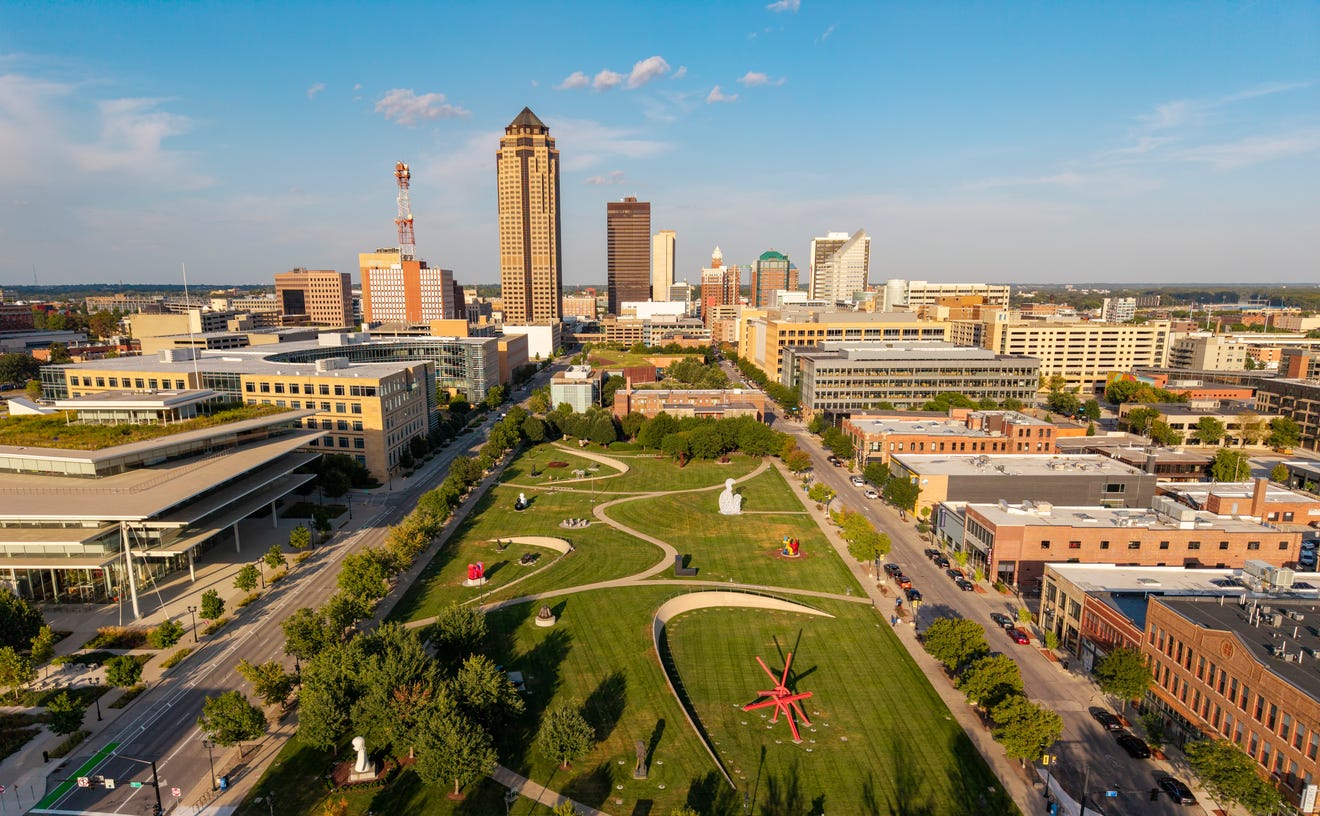



The latest Census estimates put the city at 212,086 residents and the six-county Des Moines metro at 758,539.
Updated Oct. 2, 2026.
DES MOINES, Iowa — The latest population estimates available in 2026 put the city of Des Moines at 212,086 residents and the six-county Des Moines-West Des Moines metro area at 758,539.

Both figures come from the U.S. Census Bureau’s latest population estimates, which measure population as of July 1, 2025. The metro added 7,762 residents from 2024 to 2025, an increase of about 1%.
The distinction matters because searches for the “Des Moines population” can refer to several different geographic areas. The city itself has just over 212,000 residents, while the federally defined metro includes six counties and has more than three times that population.

Des Moines city has an estimated population of 212,086
The U.S. Census Bureau estimates that 212,086 people lived within the city of Des Moines as of July 1, 2025.
That is slightly below the city’s 2020 Census count of 214,133. Census estimates show the city’s population down about 0.9% from its 2020 estimates base.

West Des Moines, which is a separate city within the metro area, had an estimated population of 74,224 in 2025.
The Des Moines metro population reached 758,539
The federally defined Des Moines-West Des Moines Metropolitan Statistical Area had an estimated 758,539 residents in 2025, up from 750,777 in 2024.

The metro includes six Iowa counties:
- Polk County
- Dallas County
- Warren County
- Jasper County
- Madison County
- Guthrie County
The latest Census estimates show the metro added 7,762 residents in one year, a growth rate of about 1%.
Dallas County continues to drive much of the metro’s growth
Polk County remains the largest county in the Des Moines metro, with an estimated population of 516,546 in 2025.
Dallas County has grown considerably faster. Its population reached an estimated 118,457 in 2025, compared with 99,678 in the 2020 Census.
The county includes fast-growing suburban communities such as Waukee and Adel, while Polk County includes Des Moines, West Des Moines, Ankeny and several other metro communities.
Why some Des Moines population figures are close to 940,000
A broader definition of Greater Des Moines produces a much larger population figure.
The Greater Des Moines Partnership describes its wider regional population as nearly 940,000 people. That regional footprint extends beyond the six counties used for the federal Des Moines-West Des Moines metro population.
For national Census metro rankings, however, the relevant figure is the federally defined Metropolitan Statistical Area population of 758,539.
The Des Moines metro remains below 1 million residents
The federally defined metro has not reached 1 million residents. Its latest estimated population of 758,539 leaves it more than 240,000 residents below that threshold.
The broader Greater Des Moines region used by local economic development organizations is much closer to 1 million, which explains why different population figures can appear in discussions about the area’s growth.
Current city estimates are available through the U.S. Census Bureau’s Des Moines QuickFacts page. The latest metropolitan estimates are published through the Census Bureau’s metropolitan population estimates.
Related: Why Des Moines is one of the Midwest’s fastest-growing metros
Stay in the know with stories that matter — visit HolaAmericaNews.com for the latest news, culture and community updates!
Facebook Comments