

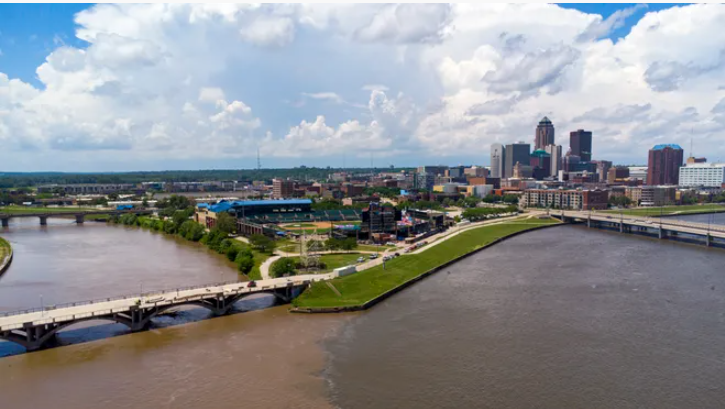



The U.S. Environmental Protection Agency’s Region 7 notified the Iowa Department of Natural Resources in July that the agency had rescinded a controversial decision to place seven segments of the Cedar, Des Moines, Iowa, Raccoon and South Skunk rivers on the state’s list of impaired waters because of high nitrate levels.
Last year, Iowa DNR railed against EPA’s decision, saying it contained “several legal errors” and incorrectly implied that “Iowa’s water is not safe.”

With new appointees under President Donald Trump, EPA Region 7 reversed the decision, a move that came as Central Iowa Water Works faced a water-quality crisis this summer, banning 600,000 Des Moines metro area customers from watering their lawns.
Demand spiked at the same time its member utilities saw high nitrate levels in the region’s primary drinking water sources, the Des Moines and Raccoon rivers, raising concern that the treatment plant wouldn’t be able to safely deliver drinking water.
“This reversal is an affront to the health and well-being of Iowans,” Jenny Turner, president of Iowa Citizens for Community Improvement’s board, said Tuesday, Aug. 12, adding that it’s “tone deaf, appalling, and dangerous.”
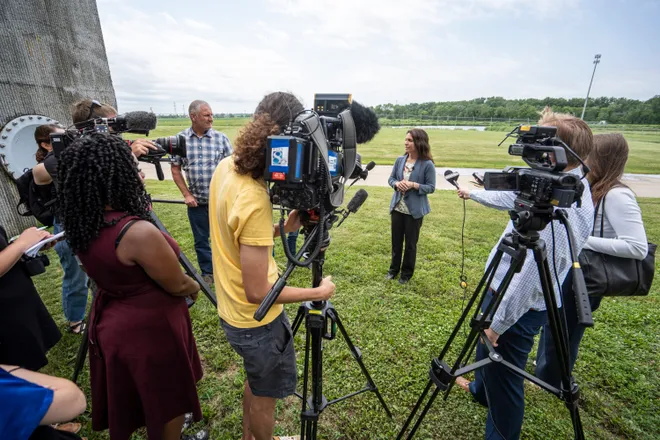
Des Moines Water Works was forced to run its large nitrate removal facility 112 days, only shutting it down on Aug. 8.

Nitrate levels in the Raccoon and Des Moines rivers, as well as an alluvial gallery along the Raccoon, were over 10 milligrams per liter for 33 of 38 days in most of June and part of July, the utility’s data shows.
On June 8, the Raccoon River nitrate levels climbed to 20.55 milligrams per liter, twice the level considered safe to drink and the second-highest level on record.
The federal government limits nitrate levels in drinking water to 10 milligrams per liter to protect against blue baby syndrome, which can be fatal to infants under 6 months.
Although it’s not reflected in the federal safe drinking water standard, researchers also have tied long-term exposure to lower nitrate concentrations in drinking water to some cancers.

“The Trump administration’s decision to remove seven Iowa waters from the impaired water list ignores science and flies in the face of the facts on the ground,” said Josh Mandelbaum, an Environmental Law & Policy Center senior attorney and a Des Moines City Council member.
“These waters are still polluted and drinking water is still threatened, and the Trump administration’s action does not change that,” Mandelbaum said Friday. “Iowans will continue to face threats to their drinking water until real action is taken to address pollution in our waters.”
After 56 days, Central Iowa Water Works lifted the last of its irrigation restrictions Thursday, Aug. 7.
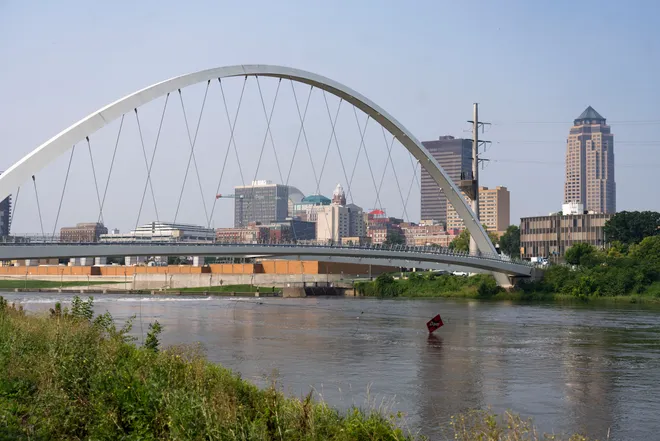
James Macy, EPA Region 7’s new administrator, said in a July 11 letter to Iowa DNR that the agency had rescinded his predecessor’s decision and would reconsider whether the segments should be added to the impaired waters list.
Macy said the EPA made the decision based on additional information the state agency provided in May. It included a Dec. 19 letter from DNR Director Kayla Lyon to EPA, opposing listing the segments, saying the decision violated federal law.
Iowa DNR didn’t comment Friday beyond providing the May documents.
Michael Schmidt, an Iowa Environmental Council’s senior attorney, said EPA’s move to rescind a final decision is highly unusual. He said he’s never seen it before.
“The public clearly recognizes that we need to address nitrates in these waters,” Schmidt said. “It’s a concern for drinking water sources across the state, not just Des Moines.
“This action definitely runs counter to the public’s interest,” he said.
Iowa river segments didn’t meet drinking water use standards
In November, former President Joe Biden’s EPA Region 7 told the Iowa DNR it had “partially approved and partially disapproved” the state’s impaired waters list — 577 segments of rivers, lakes, streams, reservoirs and wetlands, which had 746 impairments, caused by a range of pollutants, including nitrates, bacteria, and manure and fertilizer spills.
While signing off on the DNR’s proposed list, EPA said the state agency also should have added the seven segments, based on publicly available water samples that showed the areas exceeded federal nitrate limits for drinking water 40 times, primarily from 2020 to 2022.

States report every two years to the federal government whether lakes, rivers and other waterways are impaired for designated uses such as fishing and swimming.
EPA Region 7 said seven Iowa river segments were “not attaining” the needed standards for drinking water use based on state and EPA standards, Region 7 said in December.
Once a water body or segment is included on the impairment list, a total maximum daily load is established to set the limit on the amount of a pollutant allowed. That can serve as the starting point for restoring water quality, experts say.
DNR’s Lyon told the EPA in December the federal agency’s decision contained “several legal errors” and incorrectly implied that “Iowa’s water is not safe, and that DNR is not meeting either the letter or the spirit of the law.”
She wrote the federal agency was rejecting a data analysis methodology that Iowa and other states in the region had long used. It also treated nitrate as a toxic pollutant, rather than a conventional pollutant, without adopting a formal rule change.
Also opposing the addition, the Iowa Farm Bureau Federation questioned why the agency was evaluating surface water, based on finished drinking water standards.
“Raw surface water is exposed to the elements, and it is reasonable to expect that it be treated prior to distribution to a water system,” the large Iowa farm group wrote in its comments.
Agriculture is a major contributor to Iowa’s high nitrate levels, with fertilizer moving from the soil into Iowa’s waterways via underground drainage tiles. A Polk County study found that agriculture contributes about 80% of all nitrogen in the Des Moines River and the Raccoon River.
Iowa’s large rainstorms this summer also contributed by flushing nitrates that can accummulate during extended drought conditions.
The Farm Bureau told the EPA that nitrogen shouldn’t be considered toxic. “Nitrogen is required to sustain life, and it appears naturally in the environment,” the group wrote, noting it’s not listed as a toxic pollutant Clean Water Act.
EPA should “refrain from such inaccurate descriptions … in decision documents,” Farm Bureau wrote.
Des Moines Water Works: Nitrate levels a concern for years
The EPA received 72 public comments supporting adding the river segments, with three groups opposing the move — the Iowa DNR, the Iowa Farm Bureau Federation and The Fertilizer Institute.
Several Iowans, often using a form letter, challenged how the state assesses waterways for nitrate levels, saying it is “faulty and irresponsible.” They said DNR was applying a “10% rule,” designating a waterway as impaired only if water samples reveal pollutants 10% of the time.
“While EPA supports this rule for a variety of pollutants, it does not do so for nitrate due to its established toxicity,” they wrote.
Region 7 EPA said in December that adding the seven segments did not “approve or disapprove Iowa’s assessment methodology.”
“Additionally, by acknowledging the human health toxicity of nitrate to evaluate attainment of Iowa DNR’s EPA-approved water quality standards in the decision document, the EPA was not taking regulatory action classifying nitrate or changing its status” under the Clean Water Act as suggested by Iowa Farm Bureau, the agency said.
“In the absence of federal leadership, the Iowa Legislature must act swiftly to crack down on illegal pollution and restore clean water,” Tarah Heinzen, Food & Water Watch’s legal director, said in a statement Tuesday.
Ted Corrigan, Des Moines Water Works recently retired CEO, wrote in December that the state’s largest drinking water utility has “raised concerns about nitrate in raw source waters for years.
“We built our nitrate removal facility in 1992 to combat the issue, and since that time nitrate concentrations in the river flowing past the intake at our Fleur Drive Treatment Plant have not improved,” Corrigan wrote, noting that last year brought nitrate levels that were “among the highest we’ve seen.”
“DMWW has served as a regional drinking water utility for more than 100 years,” he wrote, adding that the “mission is becoming increasingly difficult with the source water quality issues in the state of Iowa.”
The difficulty utilities in the Des Moines metro and other cities encountered this summer supports EPA’s addition, said Schmidt and Mandelbaum, the environmental attorneys. “We’ve gotten a clear picture of the consequence of high nitrates in our drinking water sources,” Schmidt said.
“Efforts to remove these water bodies … is clearly misguided,” he said. And the action “undermines the public trust in the agencies charged with keeping our water clean.”
Stay in the know with stories that matter — visit HolaAmericaNews.com for the latest news, culture, and community updates!
Facebook Comments