




Twenty-two cases are among people ages 5 to 19, and 36 were unvaccinated or had unknown vaccination status. No public exposure locations have been identified in the last four weeks.
Updated Sept. 21, 2026.
By Hola Iowa

IOWA — Iowa’s measles outbreak has reached 38 confirmed cases in 2026, more than double the 17 cases reported in late August.
Iowa Health and Human Services updated the statewide count Sept. 17. Of the 38 cases, 24 were confirmed through laboratory testing and another 14 were confirmed through a direct epidemiological link to a laboratory-confirmed case.
Children and teenagers account for the largest age group in the outbreak. Iowa has reported 22 cases among people ages 5 to 19, compared with 13 cases among adults age 20 or older and three among children younger than 5.
Vaccination records show that 36 of the 38 cases involved people who were unvaccinated or whose vaccination status was unknown. Two cases involved people who had received at least one measles-containing vaccine at least 14 days before their rash began.


Thirty-three Iowa cases were acquired locally
Most of Iowa’s 2026 measles cases are now linked to transmission inside the state rather than travel.
Iowa HHS classifies 30 cases as locally acquired through a known exposure and another three as locally acquired without a known exposure. Five cases were associated with travel.

The state continues to describe the situation as an outbreak affecting multiple counties.
No public measles exposure locations are currently listed
Iowa HHS currently lists no public exposure locations identified during the previous four weeks.

That is a change from August, when health officials identified possible exposure locations in Bloomfield, Ottumwa, Clive, West Des Moines and Des Moines. The monitoring periods associated with those earlier locations have ended.
The absence of a currently listed public exposure site does not mean the outbreak has ended. Public health agencies continue investigating cases and contacting people identified as close contacts.
Measles symptoms can appear up to 21 days after infection
Measles symptoms generally begin seven to 21 days after infection. Early symptoms can include fever, cough, runny nose and red or watery eyes.
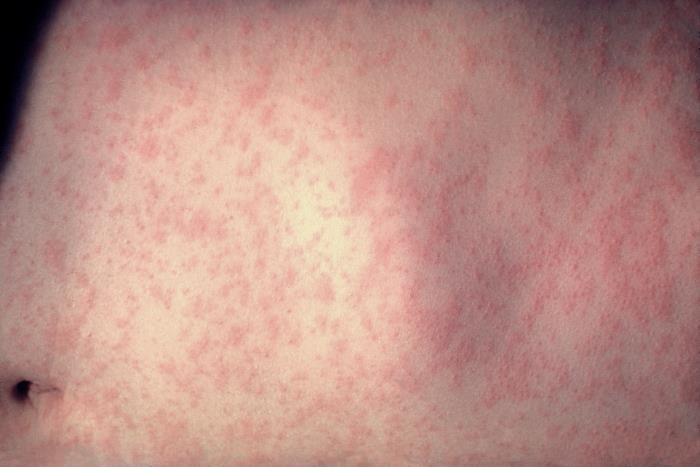
A rash often appears later and typically begins around the face before spreading to other parts of the body.
Iowa HHS instructs people who think they have measles or who develop symptoms after an exposure to isolate from others and call a health care provider, urgent care clinic or emergency room before arriving. Advance notice allows medical staff to prepare and reduce the risk of exposing other patients and employees.
Two MMR doses are about 97% effective against measles
The measles, mumps and rubella vaccine remains the primary protection against measles.
Two doses of MMR vaccine are about 97% effective at preventing measles, while one dose is about 93% effective.
CDC recommends the first routine MMR dose for children at 12 through 15 months and the second at ages 4 through 6. Iowa also requires measles vaccination for entry into public and private schools, licensed child care centers and preschools, subject to applicable requirements and exemptions.
People who are unvaccinated or unsure whether they have immunity can discuss their vaccination history with a health care professional or local public health agency.
Related: Number of Polk County students not fully vaccinated nearly doubles since 2019
Iowa updates its measles case count every Thursday
Iowa HHS updates its statewide measles totals each Thursday and publishes additional information when health officials identify a public exposure that may pose a risk to others.
Current case totals, exposure information and public health guidance are available on the Iowa HHS measles information page.
The next Thursday update is scheduled for Sept. 24.
Stay in the know with stories that matter — visit HolaAmericaNews.com for the latest news, culture and community updates!
Facebook Comments