




By Natalie Krebs, Iowa Public Radio
Racial and ethnic group disparities persist across Iowa’s healthcare system, according to a new report.

The third edition of the State Health Disparities Report by the nonprofit Commonwealth Fund looked at health data at the state level and found differences in quality, access and outcomes in care along racial lines across all states.
Though the report found racial and ethnic disparities were less severe in Iowa as compared to neighboring states, it concluded that white Iowans ranked in the 82nd percentile nationally for healthcare outcomes compared to the 18th percentile for Hispanic Iowans and 19th percentile for Black Iowans.
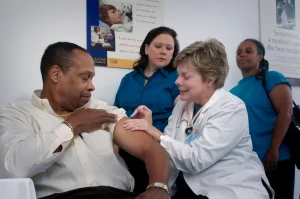
fBreaking down the data along racial lines helps to find who is left behind when it comes to healthcare, said Jess Maksut, director of health equity research at the Commonwealth Fund.
“We explore whether people have good access to healthcare, are getting the right care at the right time, and if the health system is helping people to live long and healthy lives,” she said. “But state level averages can mask the disparities that exist between different groups of people.”

Researchers looked at the most recent data from 2023 and 2024 for 24 indicators across five racial and ethnic groups: white; Black; Hispanic; Asian American, Native Hawaiian and Pacific Islander; and American Indian and Alaska Native.
The data show vast differences in Iowa data in some categories such as the rates of people who are uninsured. The report found 6% of white Iowans ages 19 to 64 are uninsured as compared to 12% of Asian American, Native Hawaiian and Pacific Islander Iowans, 19% of Black Iowans and 23% of Hispanic Iowans. The report did not include information on Iowans who are American Indian and Alaska Native because the state’s sample size is too small.

Read more: Study finds nitrate contamination in water systems nationwide
Recent federal policy changes, such as Medicaid spending reductions and the expiration of Affordable Care Act tax credits are expected to increase racial gaps in healthcare, Maksut said.

“Medicaid unwinding, [ACA] marketplace changes and new restrictions affecting immigrants and asylees are now eroding access with disproportionate impacts to American Indian, Alaska Native, Black and Hispanic communities,” she said.
The number of Black, Hispanic and American Indian and Alaska Native communities who are uninsured is expected to greatly increase in the next decade unless policy changes are made, said Laurie Zephyrin, the senior vice president for achieving equitable outcomes at the Commonwealth Fund.
“Priorities include extended enhanced ACA tax credits, simplifying Medicaid and marketplace enrollment and renewal processes and expanding Medicaid or closing the coverage gap,” she said.
Other priorities recommended by researchers include increasing community health workers, strengthening pipelines to create a diverse workforce and strengthening social support programs like tax credits, childcare and the Supplemental Nutrition Assistance Program.
“Policy makers and system leaders can improve access to affordable, high quality care. There are things that can be done here,” Zephyrin said.
Stay in the know with stories that matter — visit HolaAmericaNews.com for the latest news, culture, and community updates!
Facebook Comments