




By Hola Iowa
Metro Waste Authority warns that vapes, smartphones, electric toothbrushes and other rechargeable devices can spark fires when they end up in regular trash.
Rechargeable batteries and improperly discarded electronic devices have become a growing fire risk in the Des Moines metro’s waste system, where local officials have reported more fires at solid waste facilities and in trash trucks.

The problem involves items found in many homes: vapes, smartphones, electric toothbrushes and other devices powered by lithium batteries. When those items are thrown into regular trash and later crushed or damaged, they can spark fires in landfills, recycling facilities or garbage trucks.
Metro Waste Authority has reported more facility fires
Metro Waste Authority recorded eight fires at its facilities in 2024. In 2025, that number rose to 21, and the agency had already recorded at least seven fires in 2026 by late March, according to information attributed to executive director Michael McCoy.

The increase has pushed battery disposal higher on the agency’s prevention list. Metro Waste Authority says it can respond once a fire starts, but the larger effort is stopping rechargeable batteries from entering the regular trash stream in the first place.

The risk is not limited to flames. Batteries can release toxic fumes when they burn, and fires can put landfill workers and trash truck drivers at risk of injury.
A Grimes recycling facility lost $2.5 million after a fire
Battery-related fires can also carry major costs for local waste systems. In 2023, a fire forced the Grimes recycling facility to close for more than two months, resulting in $2.5 million in losses while the site was shut down.
A rechargeable device may look harmless inside a household trash bag, but pressure inside a truck or facility can change that quickly. If a battery is punctured, crushed or damaged, it can overheat and ignite.
McCoy summarized the warning this way: “If you can recharge it, it’s a problem.”

A May landfill fire renewed local warnings
On May 4, a large fire broke out at Metro Park East Landfill in Mitchellville, near Des Moines, shortly after Metro Waste Authority officials had warned city leaders about the growing risks tied to improper battery disposal.
The fire was described as one of the largest landfill fires in the area’s history. Local waste officials suspect lithium batteries or rechargeable electronics may have ignited after being compacted in the trash stream.
About 12 Metro Waste Authority employees worked for around 12 hours to fight the fire, according to the report.
Vapes, phones and electric toothbrushes should not go in regular trash
Rechargeable devices are now part of everyday life: e-cigarettes, old cellphones, earbuds, toys, power tools, tablets, laptops, electric toothbrushes and other household items.
The problem starts when those items are placed in regular trash. Once they move through bags, bins, trucks and compacting equipment, the batteries inside can be damaged and create heat, sparks or fire.
For households, the practical step is to separate rechargeable devices before throwing anything away. If an item has a built-in battery or can be plugged in to recharge, it should not be treated as regular household waste.
Free battery drop-off bins are available across the metro
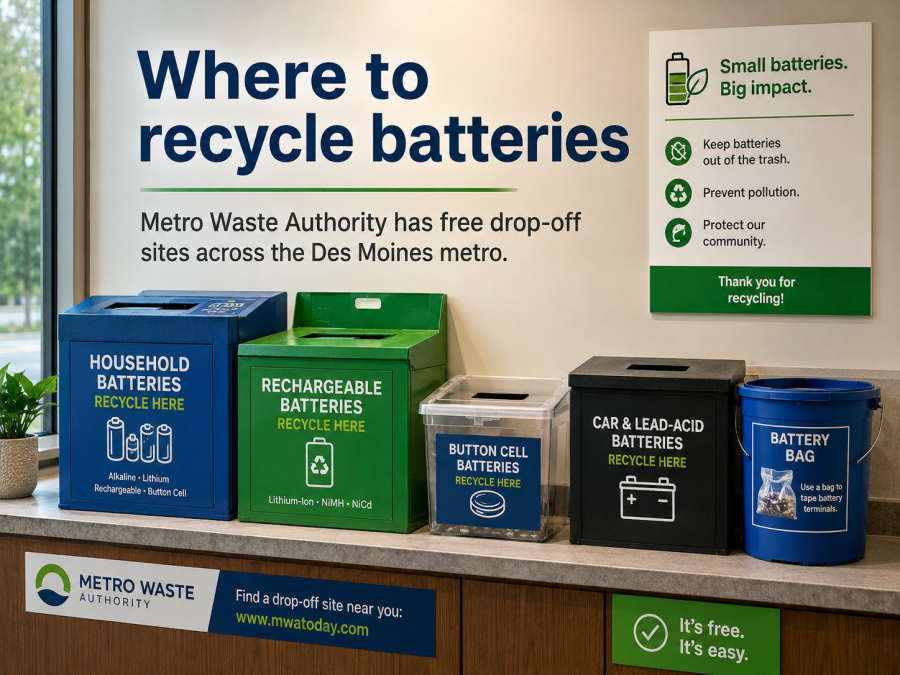
Metro Waste Authority began distributing battery bins around the Des Moines metro in April 2025. Since then, the agency has collected 14,000 pounds of batteries and now has 29 drop-off locations across the metro area.
The bins allow residents to dispose of batteries for free and help keep them out of landfills and garbage trucks. The agency has made the drop-off sites part of its fire prevention strategy.
Residents can check drawers, old chargers, broken electronics and rechargeable household devices before putting items in the trash. Batteries and rechargeable electronics should be taken to an approved drop-off location instead of being placed in a household garbage bin.
Iowa could revisit battery recycling legislation
Metro Waste Authority is backing changes to Iowa House File 726, a battery recycling bill that would require battery manufacturers to provide funding to Iowa solid waste agencies for lithium battery education, marketing and collection.
Other states, including Washington, Oregon and California, have passed laws requiring battery distributors to create collection systems, especially for devices with embedded batteries.
This year’s legislative session ended earlier in May, but Metro Waste Authority officials are already advocating for lawmakers to revive broader battery recycling proposals when they return next year. Free battery drop-off sites remain available across the Des Moines metro area.
Stay in the know with stories that matter — visit HolaAmericaNews.com for the latest news, culture, and community updates!
Facebook Comments