




By Christina Fernández-Morrow
Diabetes affects an estimated 17% of Latinos in Iowa. That’s nearly double the state’s non-Latino rate of 9.7%. It remains a leading cause of kidney failure, vision loss, and premature death. Despite this urgent challenge, many Latinos do not recognize the warning signs or know about free local screening and care options, allowing the disease to progress silently until it’s too late.

The devastating impact of undetected diabetes became painfully clear when Iowa lost a beloved advocate and leader to this disease. Father Guillermo Treviño Jr. of Iowa City had unknowingly lived with diabetes for years, which tragically led to nerve damage that caused his stomach to perforate, and the resulting infection spread throughout his body before anyone realized what was happening. He died on October 31, 2025, following in the footsteps of his father, who also had diabetes.
Stories like Father Treviño’s remind us why awareness and early detection are so critical. The good news is that help is available, and knowledge can save lives.
Explore the warning signs, steps to lower your risk, and how to access cost-free resources across Iowa.
Diabetes in Iowa: Why It Matters
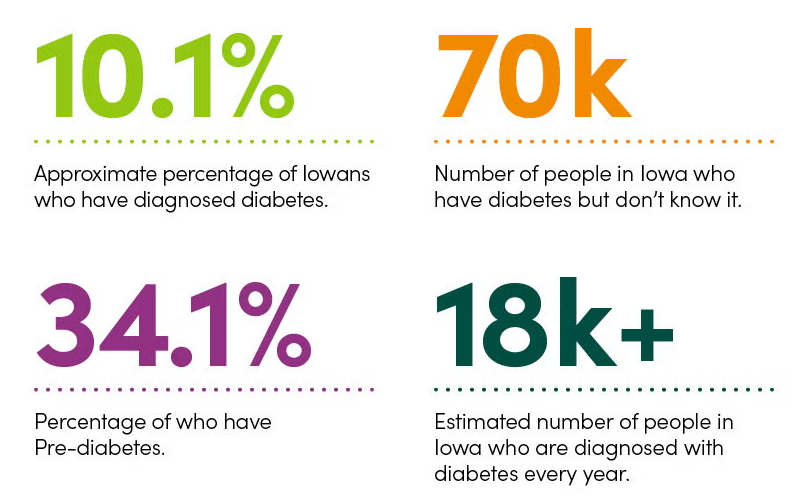
Underserved populations face more barriers to screening and care, resulting in higher rates of preventable complications that can often include heart disease, kidney failure, blindness, and amputations. While nearly half of Iowans with diabetes are diagnosed between ages 44-60, more young people are diagnosed each year.

Warning Signs You Shouldn’t Ignore
Prediabetes
- Often there are no symptoms, but may include mild tiredness or darkened skin, often on the neck and armpits.
- Anyone over 45 or with extra weight/family history should get tested regularly, even if they are not experiencing symptoms.
For Type 2 Diabetes (Most Common in Iowa Latinos)

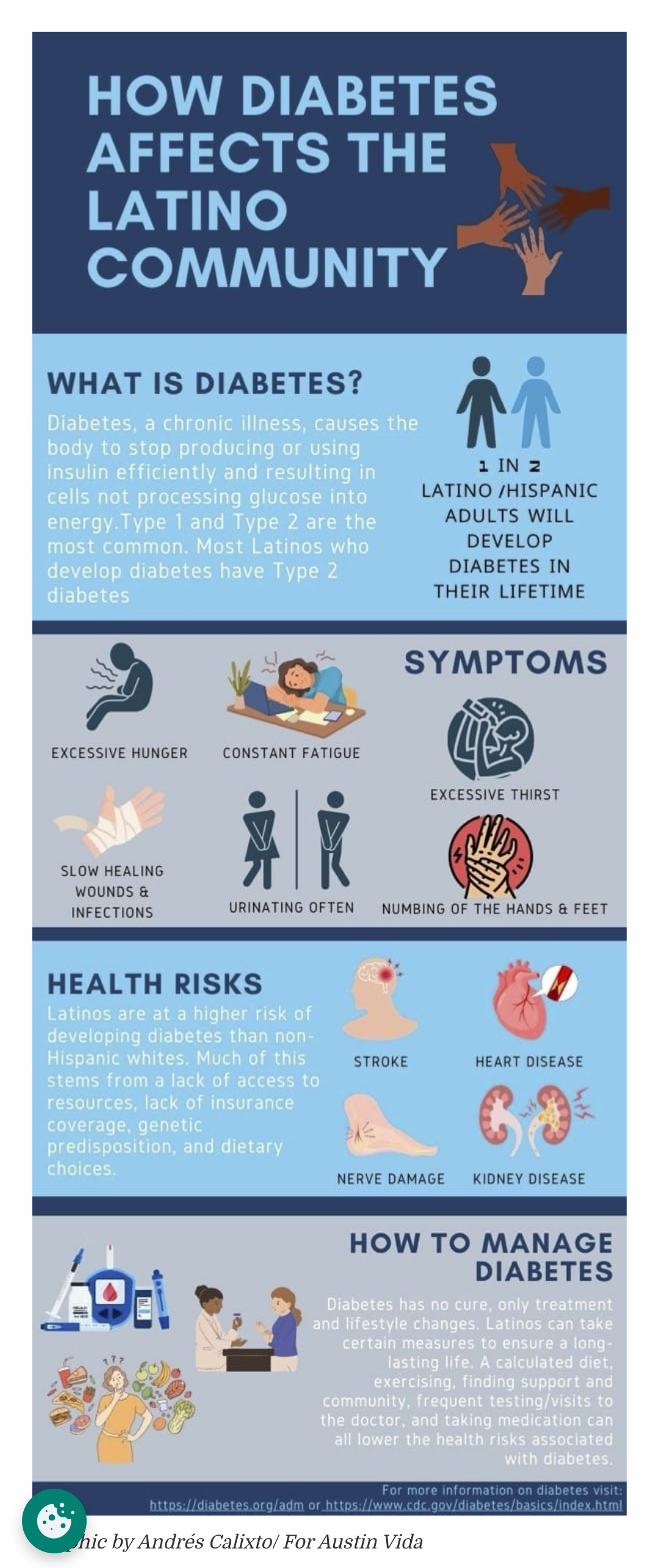
- Frequent urination
- Excessive thirst
- Increased hunger (despite regular eating)
- Chronic fatigue
- Blurry vision
- Slow-healing wounds
- Numbness in hands or feet
- Recurrent infections
Less common, but serious symptoms can include deep, rapid breathing, severe confusion or loss of consciousness, or fruity-smelling breath. Immediate care may be needed if these symptoms develop.
Anyone over 45, or with a family history of diabetes, anyone diagnosed with obesity, those who lack consistent physical activity, or gestational diabetes history are most at risk.

Get screened every three years if over 45 or with risk factors; ask for a blood glucose or A1C test.
Healthy options are part of the Latino culture, like eating beans, vegetables, herbs, fiber-rich grains, and salsas. The libraries have several cookbooks tailored to diabetic diets, so you can adjust traditional recipes based on diabetic guidelines and eliminate sugar and fried food.
Exercise is key. Even a 30-minute walk can make a difference when practiced at least 5 days a week.
Track your weight. Even a 5% weight loss helps. Remember, stress can increase blood sugar. Manage your stress with music, community time, or prayer.
Iowa offers free and low-cost help for Latino patients, many available in Spanish and do not require private health insurance:
Iowa Resources for Diabetes Screening and Treatment
- Hy-Vee Dietitians: Free A1C screenings every April, plus Spanish-speaking team members. Register online or call (515) 695-3121.
- MyHealthIowa Mobile Clinics: Free screenings and prevention education, serving Latino neighborhoods in Des Moines, Marshalltown, and Sioux City.
- University of Iowa Health Care: (319) 384-8442.
- Blue Circle Health (Virtual): Free virtual Type 1 diabetes support statewide.
- If you have Iowa Total Care (Medicaid), they offer free eye exams/A1C testing for members.
National and online resources:
- American Diabetes Association: Free risk tests, educational videos, and helpline: 1-800-DIABETES.
- Latino Diabetes Association “LUCHA” Program: Virtual bilingual classes and cookbooks.
Diabetes is common within Latino communities, but when recognized early there are several options for treatment so most can live a long and healthy live managing the disease. Get screened and talk to your doctor, especially if diabetes runs in your family. Access local or virtual resources and call Iowa Department of Health and Human Services at (515) 281-7689 for free screening locations across the state.
Stay in the know with stories that matter — visit HolaAmericaNews.com for the latest news, culture, and community updates!
Facebook Comments