




By Virginia Barreda, Kate Kealey, Des Moines Register
A long-empty former school and community center listed among Des Moines’ most endangered buildings could be razed to make way for a long-awaited project to provide affordable housing for people experiencing chronic homelessness.

Local nonprofit Joppa plans to begin Phase 1 of its tiny home village at 2501 Maury St., south of Martin Luther King Jr. Parkway and about 3 miles east of downtown, with a groundbreaking planned for September, CEO Joe Stevens said. He estimates the first phase will cost about $12.4 million.
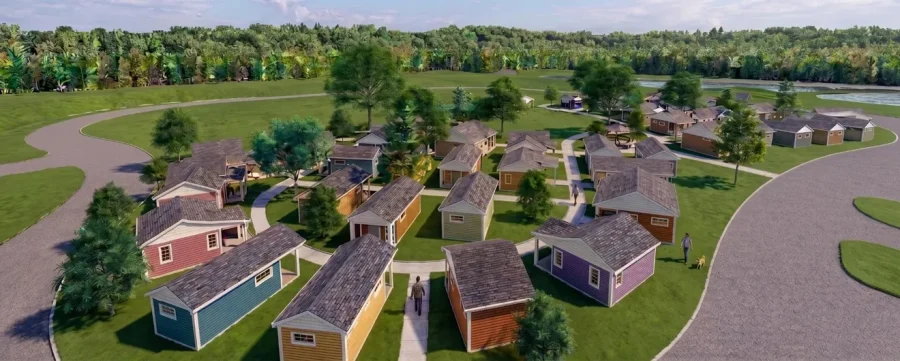
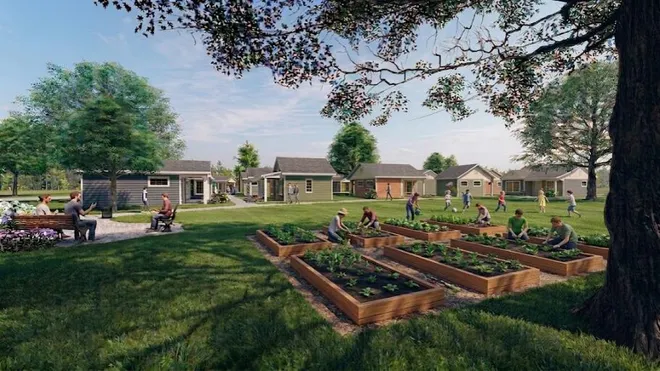
Modeled after Community First! Village in Austin, Texas — and in the planning stage for more than a decade — Joppa’s village is slated to provide permanent housing for about 25 people in its first phase, along with support for jobs, transportation and health care. The city’s Plan and Zoning Commission approved the site plan for the first phase on June 18.
“We’re moving from vision to construction,” Stevens told the Register on July 1.
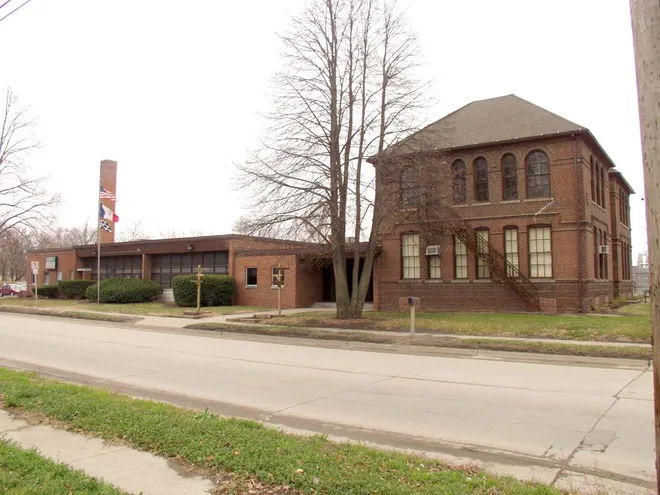
What’s happening to the Chesterfield School?
Chesterfield School sits on a nearly 11-acre property and was planned to serve as the project’s community care center, but rehabilitating the building would cost Joppa nearly 40% more than new construction, Stevens said. Existing structures on the site, like a greenhouse built in 1975 by the city of Des Moines, will also be removed for site preparation.

“As a nonprofit, we’ve got the responsibility to be careful stewards of our donors’ dollars,” Stevens said. “Donors are interested in solving the chronic homeless problem here in our city. Our mission is not to spend extra money renovating buildings.”
Joppa initially purchased a 21-acre property at 1661 County Line Road south of Des Moines International Airport in early 2024 with the intent of completing the first phase of the project there by this winter. The nonprofit received the go-ahead from plan and zoning commissioners in mid-January 2025.
It scrapped those plans when city leaders determined the Chesterfield School property would be a better fit for the project. The city-owned site is closer to resources and it has infrastructure, such as stormwater utilities, already in place.
Built around 1890 and later expanded, the brick school served the community of Chesterfield, which later became part of the city of Des Moines. The city bought the property in 1975 and used the building for a time as a community center.

The Des Moines Heritage Trust added the structure to its 2025 list of most endangered buildings at risk of demolition or irreparable damage. But even with renovation, the former school building still would not provide the most functional or sustainable space for residents, Stevens said.
Provided By Joppa
What does Joppa’s first phase of the tiny home project include?
The first phase of the village project will consist of 25 homes, the community center, the site’s underground infrastructure, laundry facilities, fencing and security, Stevens said.
A building replacing the former school will be home to the village’s “neighbor care community center,” providing space for meals, health care and support services, he said, and will include a kitchen, convenience store and gym. New construction will have a lower operating cost in comparison to the school building, even if it had been renovated, he said.
“We’ll have something that is more purpose-built, much more functional and up to code,” he said.
If all goes as planned, he said, he hopes for demolition to start as early as 2027, pending city approval.
Joppa will begin building five tiny homes after breaking ground in the fall, with plans to bring a total of 25 in Phase 1 of the project. Home sizes will range from less than 200 square feet to nearly 400 square feet, including a bedroom, bathroom, kitchen and living space.
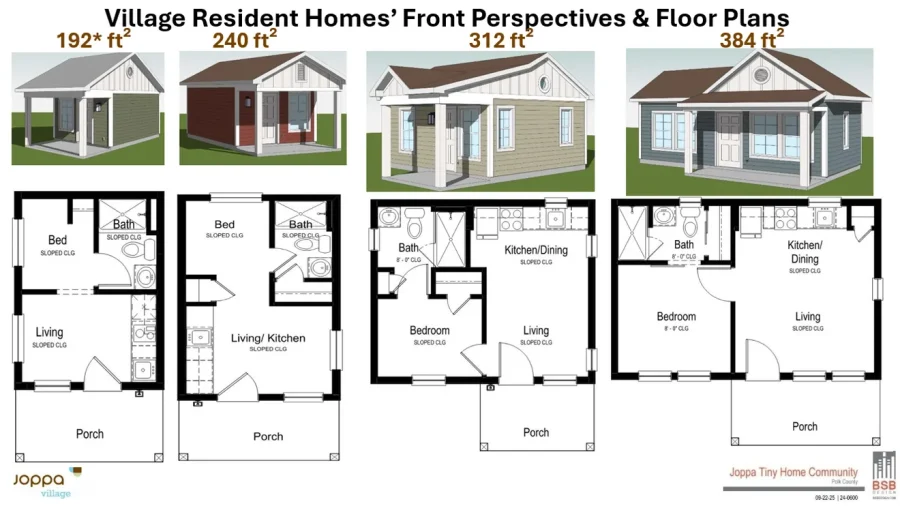
Provided By Joppa
“Everything comes down to how fast we can raise the money and how fast we can get through all of those permitting and approval processes,” Stevens said.
Also in the fall, Joppa will launch a capital campaign to raise the remaining funds to reach its $12.4 million goal, the estimated cost for Phase 1, he said.
So far, Joppa has raised about $2 million, with about $1.28 million from Polk County and a $400,000 legacy grant from the Prairie Meadows Racetrack and Casino. All funds from the sale of the originally planned village site on County Line Road will also go toward the first phase, Stevens said.
Ashley Hinson says Supreme Court got birthright citizenship wrong
What’s next for Joppa?
Later phases would provide housing for more than 200 people, which is enough to house two-thirds of the city’s chronically homeless population, Stevens said.
The number of people experiencing homelessness in Polk County continues to rise, according to the latest point-in-time count, or PIT, from local agency Homeward, Polk County’s homelessness planning organization. The count is conducted in Polk County over 24 hours twice a year.
About 835 people were found without permanent housing — in emergency shelter, transitional housing or unsheltered — on a single night in January, a nearly 7% increase from the same time in 2025, according to data from the Institute for Community Alliances.
Of those, there were 210 people living outside — a 2% increase from last year, the data shows. That number is likely closer to 300 since the survey covers a limited window of time, Stevens said.
Joppa’s Chesterfield site is about one-quarter the size of the originally planned County Line Road location but Stevens said the organization is working to acquire surrounding land primarily owned by the Des Moines Metropolitan Wastewater Reclamation Authority.
Land on the southern edge of the Phase 1 boundary line will not be available because the authority needs it as part of its stormwater management system and for future improvements, according to a site plan for the village.
Still, Stevens said, all 200 homes would fit on the current 11-acre plot. After five years of leasing the land from the city, Joppa plans to purchase the property, he said.
“We’re just excited to help chronically homeless people who have really lost hope, who a lot of times we’ve lost hope for, find their home and be able to fit in our community,” he said.
Construction on Phase 1 is slated to start Sept. 3, the same day as Joppa celebrates its 18th year, he said.
Virginia Barreda is the Des Moines city government and Polk County reporter for the Register. She can be reached at [email protected].
Kate Kealey is the growth and development reporter for the Register. Reach her [email protected] or follow her on X at @Kkealey17.
Stay in the know with stories that matter — visit HolaAmericaNews.com for the latest news, culture, and community updates!
Facebook Comments