



By Hola Iowa
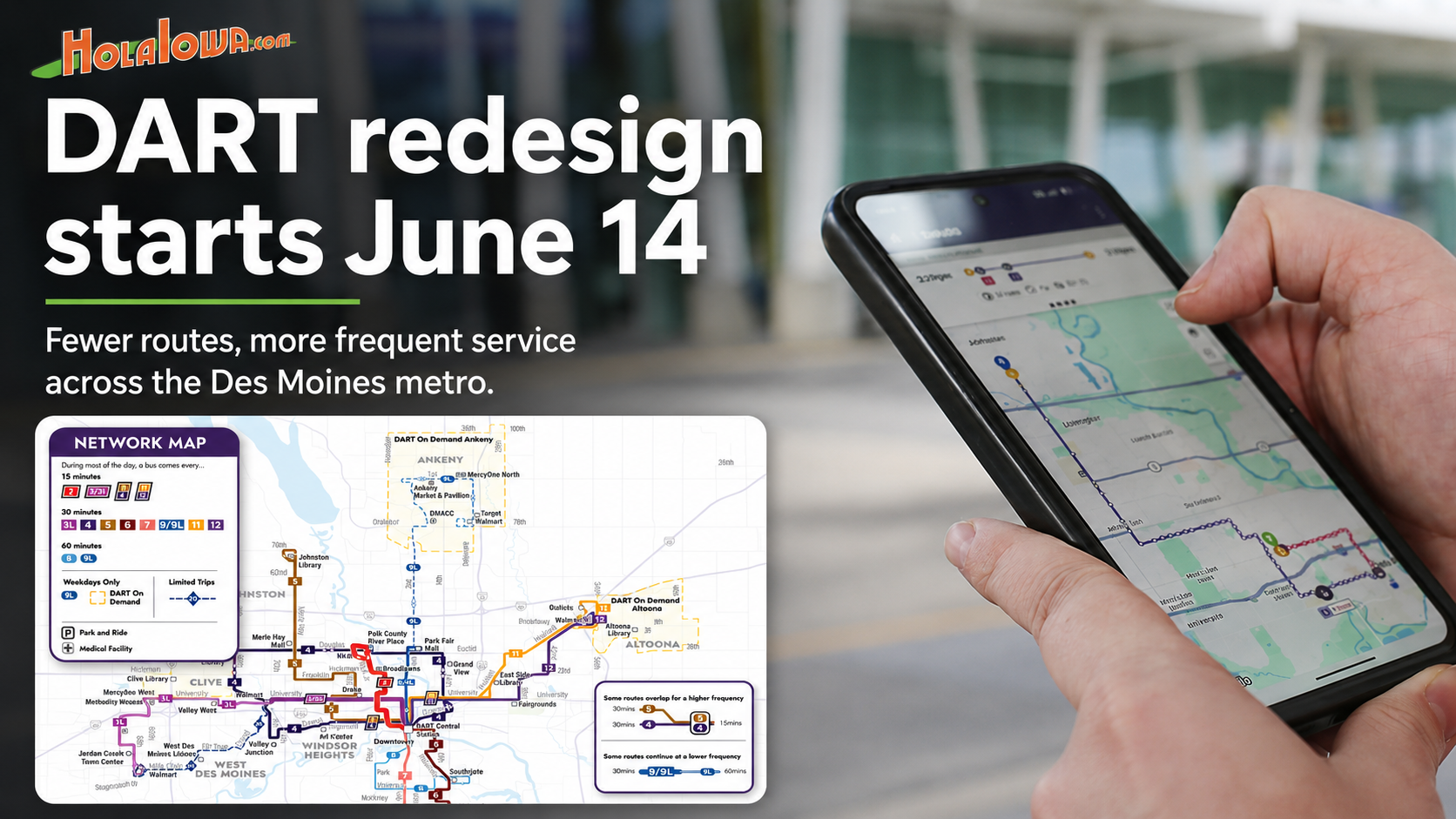
The new network begins June 14 with 10 main routes, free rides through June 30 and changes to stops, schedules and transfers.
DART riders in the Des Moines metro will see a major change to bus service beginning Sunday, June 14.

The Des Moines Area Regional Transit Authority, known as DART, will replace its current 27-route system with 10 main routes under its Reimagine DART plan. The agency says the new network is designed to provide more frequent service throughout the day on the busiest corridors in the metro.
All DART bus routes will be free to ride from June 14 through June 30 to help passengers adjust to the new system. Regular fares are scheduled to return July 1.

The new DART network starts June 14
The route changes take effect Sunday, June 14. Riders should check whether their usual route, stop or transfer point will change before the new network begins.

DART says the redesign will replace existing local routes with 10 main routes. The agency has published new maps, schedules and online tools so riders can compare their current trips with the new system.
Covered bus stop signs already visible on streets in Des Moines and other parts of the metro are part of the transition. Those stops will not become active until the new network launches.

The agency is asking riders to review the changes before June 14, especially if they use the bus to get to work, school, medical appointments, grocery stores or other regular destinations.
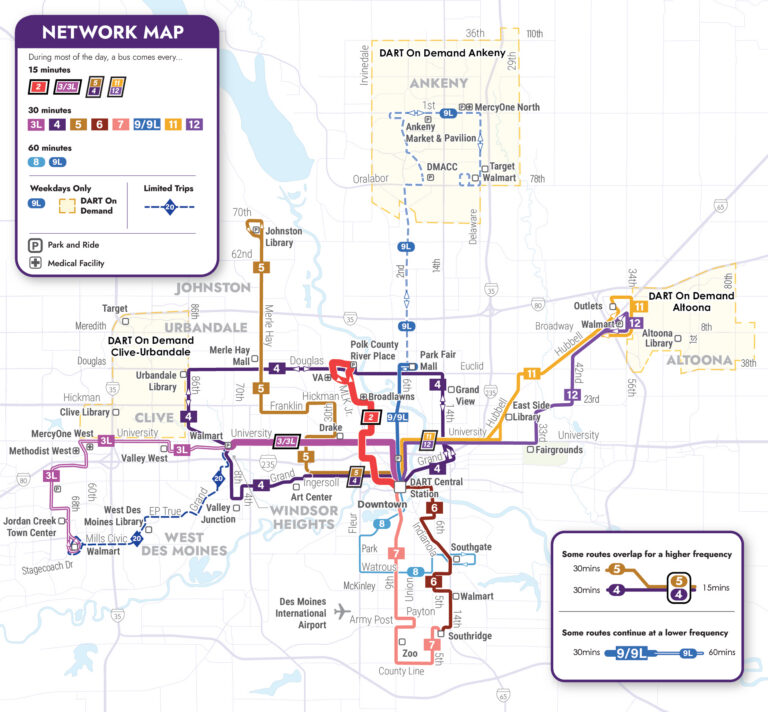
Fewer routes will support 15- to 30-minute service on busier corridors
The new system will have fewer routes, but DART says buses will come more often in the areas with the highest demand.
Several routes are expected to run every 15 to 30 minutes for much of the day, seven days a week.
The plan focuses service on corridors with more schools, jobs, businesses and entertainment destinations. Key corridors include University Avenue toward Valley West Mall and Ingersoll Avenue toward 42nd Street.
DART also says the new network is designed to make some transfers easier and reduce the need for every trip to go through downtown Des Moines.
Some riders may have to walk farther to a bus stop
The redesign will also change the location of many bus stops.
DART is moving to wider stop spacing so buses stop less often, move faster and keep more consistent schedules.
For some passengers, that may mean a longer walk to the nearest stop. For others, it could mean less time waiting or a faster ride on corridors where buses run more frequently.
DART estimates the new network will allow the average resident to reach 15% more jobs within 45 minutes by public transit.
DART says travel patterns changed after the pandemic
DART began reevaluating its bus network after the COVID-19 pandemic changed how people move around the metro.
Erin Hockman, DART’s chief executive officer, told Iowa Public Radio the agency no longer sees as many traditional 8 a.m. to 5 p.m. office commuters because some people now work remotely full time or for much of the week.
The agency also saw more demand throughout the day, not only during the usual morning and evening commute times.
Before approving the new network, DART held two rounds of public input. The agency presented two models: one with fewer routes and more frequent service, and another with broader coverage but less frequent buses.
Lee más: Route changes in Des Moines: covered DART signs point to upcoming adjustments
Many DART riders depend on the bus to get to work
DART customer satisfaction surveys found that 61% of riders do not have a driver’s license or a car.
Hockman told Iowa Public Radio many riders are essential workers who rely on bus service to get to their jobs. Those jobs do not always follow a traditional office schedule.
Some riders work early mornings, evenings or weekends. DART says the new network is intended to provide more consistent service throughout the day and throughout the week.
The agency estimates the new route network will give 22,000 more people access to transit in the Des Moines metro area.
Service hours will be shorter on weekdays and Saturdays
The new system will change routes and stops, but it will also reduce some service hours.
According to DART, service hours will be reduced by two hours on weekdays and by one hour on Saturdays. The agency says the change is meant to match service with what participating communities can afford and limit property tax growth.
Most main routes will still operate seven days a week, but riders should check the new schedules before planning early-morning or late-night trips.
Passengers who depend on specific connections should also review whether their transfer point or timing will change under the new network.
Route 4 will connect five major communities
One of the routes highlighted during public tours was Route 4.
The route creates a loop that connects five major communities, including Urbandale and West Des Moines. During a late-May tour, DART showed how the route will pass through commercial areas and neighborhoods such as Highland Park on the north side of Des Moines.
The agency says more frequent service can help connect businesses, schools and residential areas more regularly throughout the day.
For small businesses near active bus stops, more frequent service may bring more foot traffic and more riders who notice shops, restaurants or services in the neighborhood.
Bus rides will be free from June 14 through June 30
DART will offer free rides on all bus routes from June 14 through June 30.
The free-ride period is intended to give passengers time to try the new routes, find their stops and adjust their schedules before regular fares return.
Regular fares are scheduled to resume July 1. Riders can review routes, maps and schedules on DART’s official website or contact the agency for trip-planning help.
The new routes begin Sunday, June 14, and covered bus stop signs will remain out of service until that date.
Stay in the know with stories that matter — visit HolaAmericaNews.com for the latest news, culture, and community updates!
Facebook Comments