

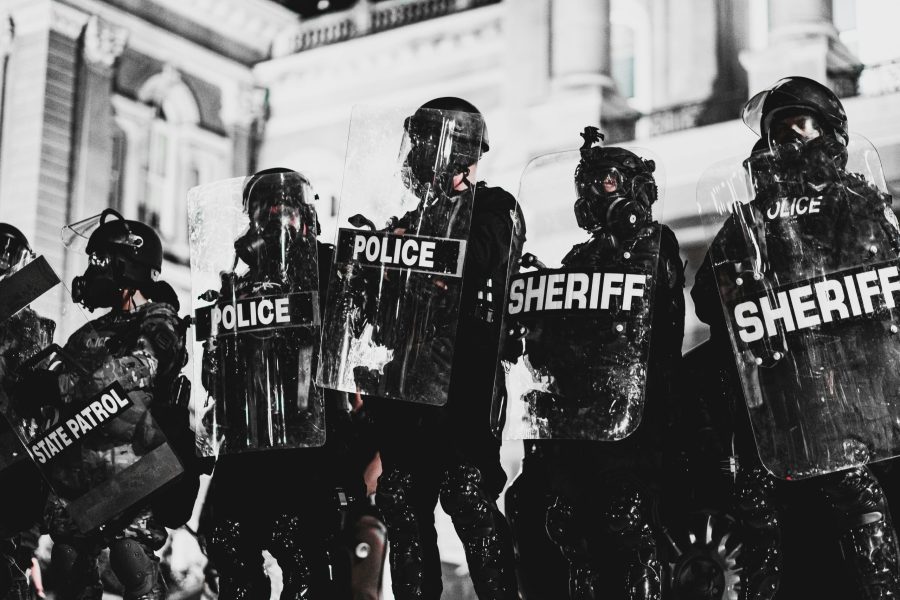



The law, in effect since July 1, keeps annual de-escalation training but removes state-required instruction on implicit bias, cultural awareness, profiling and civil rights.
Iowa no longer requires law enforcement officers to complete annual training on bias prevention or racial and cultural awareness after HF 2711 took effect July 1.
The annual training mandate did not disappear entirely. Police agencies must continue to train officers in de-escalation techniques meant to reduce the use of force. However, each agency can now decide whether to keep instruction related to bias, diversity and community relations.

Gov. Kim Reynolds signed HF 2711 on June 2. The Iowa House approved the measure in a 64-29 vote, while the Senate passed it 31-15.
What Iowa removed from police training requirements
The previous law required statewide training guidelines to address bias prevention and respect for diverse communities. The guidelines also covered policing practices that can lead to biased actions, the effects of racial profiling on community relations and the history of the civil rights movement.
Other required topics included implicit bias, perspectives from different community groups and noncombative ways to conduct police work in diverse communities.
HF 2711 removed those seven areas from the Iowa Code. It kept only the section on de-escalation, which covers verbal and physical tactics designed to reduce the need for force and nonlethal methods of applying it.

The law also ended a consultation requirement for the Iowa Law Enforcement Academy.
When developing guidelines, the academy no longer has to consult the Iowa Civil Rights Commission or community organizations.

It also no longer has to consult specialists in cultural awareness, diversity or biased policing.
The Iowa Law Enforcement Academy’s current requirements continue to list de-escalation as annual training. Bias prevention is no longer listed as a separate statewide requirement.

Related: Iowans push back against bill ending affirmative action and police bias training
Des Moines and Waukee will continue the training
The Des Moines and Waukee police departments have confirmed that they will continue providing bias and cultural-awareness training even though the state no longer requires it.
Paul Parizek, a spokesperson for the Des Moines Police Department, said the agency has provided diversity and cultural-awareness training for decades. Des Moines also had a written policy in place before Iowa established the statewide mandate in 2020.
Waukee will also retain its program. The department has conducted annual training on its bias-based policing policy. Its instruction has covered police contacts, traffic stops, cultural diversity, discrimination and community support.
HF 2711 does not create a public reporting system to identify which departments will keep the eliminated courses. Training beyond de-escalation may therefore vary among Iowa cities, counties and law enforcement agencies.
The requirement was part of Iowa’s 2020 police reform law
Iowa established annual de-escalation and bias-prevention training through HF 2647. Lawmakers unanimously approved the police reform measure in 2020 after George Floyd was killed by a Minneapolis police officer.
The original version of the 2026 proposal would have eliminated both bias prevention and de-escalation training requirements. An amendment restored the de-escalation mandate before the House held its final vote.
During the House debate, Republican Rep. Skyler Wheeler of Hull described the 2020 requirement as an “emotional response” and called implicit bias “junk science.” Wheeler argued that HF 2711 would help establish a fairer system.
Betty Andrews, president of the Iowa-Nebraska State Conference of the NAACP, said de-escalation is not a substitute for training on bias and cultural awareness. The organization is concerned that leaving the decision to individual agencies could create major differences in how officers are prepared across Iowa.
The NAACP is working toward a possible legislative change during the next session.
For now, annual de-escalation training remains mandatory for Iowa law enforcement officers. Training on bias, profiling and cultural awareness will depend on the policies adopted by each department.
Stay in the know with stories that matter — visit HolaAmericaNews.com for the latest news, culture and community updates.
Facebook Comments