


By Hola Iowa
The National Weather Service has extreme heat warnings in place for much of Iowa, with heat index values above 100°F (37°C) and dangerous conditions for families, older adults, people without air conditioning and outdoor workers.
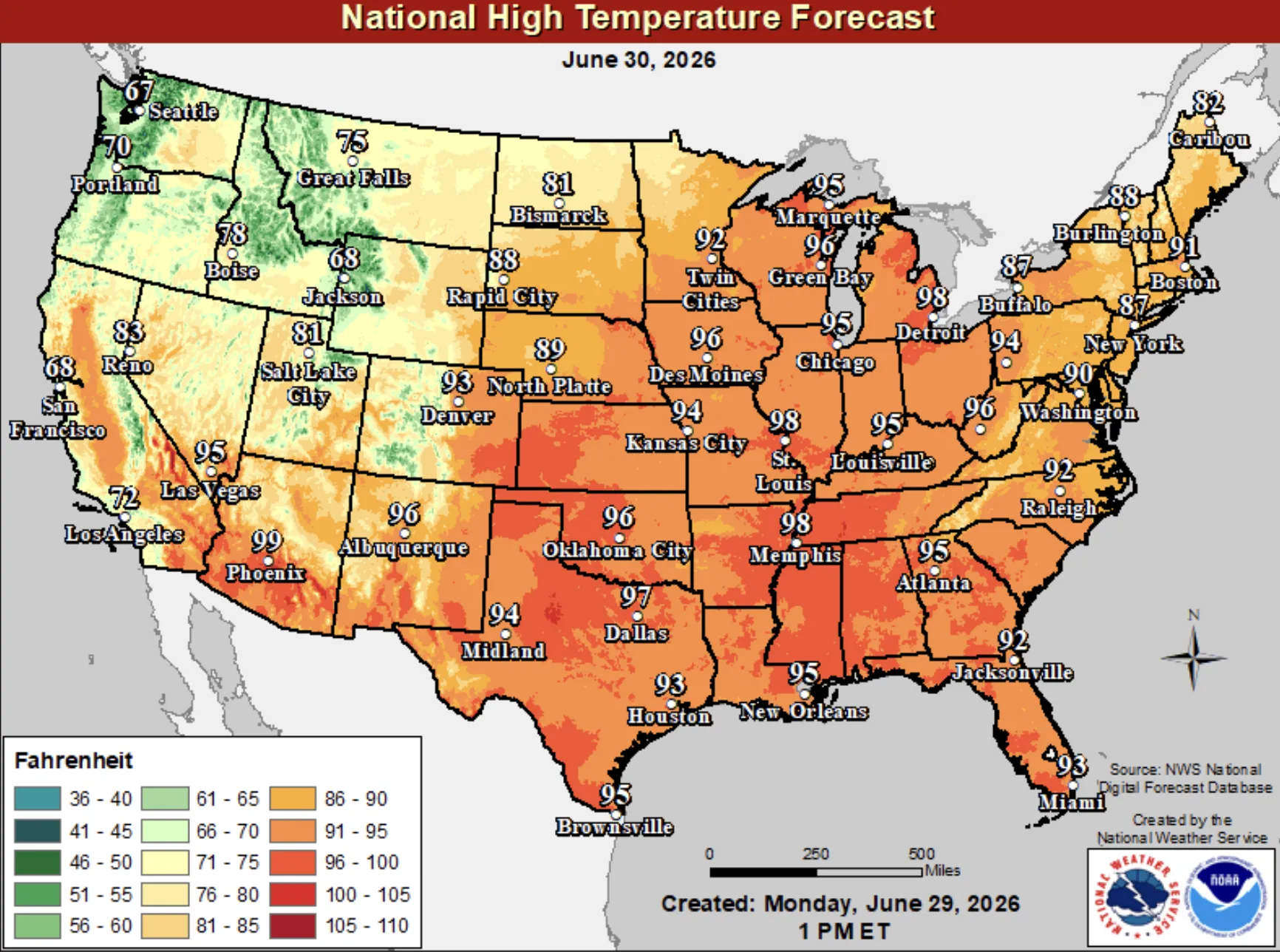
Extreme heat will continue affecting Iowa during the final days of June and could last into the Fourth of July weekend, according to the National Weather Service forecast in Des Moines.

The extreme heat warning for much of central Iowa remains in effect until Tuesday, June 30, at 9 p.m. In that area, heat index values could reach 107°F, especially during the hottest hours of the day.
In Des Moines, Tuesday’s forecast calls for a high near 96°F, with heat index values up to 105°F. For Wednesday, the high remains near 95°F, with south-southwest winds and continued hot conditions.

The heat pattern will not necessarily end with Tuesday’s warning. The National Weather Service indicated that the highest heat index values were expected Sunday and Monday, but hot and humid conditions could continue through the workweek and into the holiday weekend.

Humidity makes heat more dangerous when the body cannot cool down
The risk does not depend only on the temperature shown on the thermometer. The heat index combines temperature and humidity to estimate how the air actually feels to the body.
Iowa Health and Human Services explains that heat stress affects the body’s ability to cool itself. The body normally cools down by sweating, but under certain conditions, sweating is not enough. When body temperature rises quickly, heat can damage the brain or other vital organs.

Heat-related illnesses can range from heat rash and cramps to heat exhaustion. Heat stroke is the most serious form and can cause death or permanent disability without emergency care.
Groups at higher risk include babies and children up to age 4, people 65 and older, people who are overweight, people who are sick and those taking certain medications. Dehydration, heart problems, poor circulation, fever, sunburn, alcohol use and some prescription medications can also increase the risk.

Des Moines and other cities face several days of intense heat
The heat wave has already changed plans across the Midwest. Outdoor activities, summer camps and community events have been canceled, delayed or adjusted in different parts of the region as communities open places where people can cool off.
In Des Moines, some families have turned to splash pads and spraygrounds as heat index values approach or exceed 100°F during the day.
The forecast for central Iowa also includes warm nights, which can make it harder for homes without air conditioning to cool down after sunset. That lack of nighttime relief can add to the physical strain of several consecutive days of heat.

The most direct prevention measures include staying in air-conditioned spaces during the hottest hours, drinking water often, wearing light, loose clothing, reducing intense outdoor activity during midday heat and seeking shade when needed.
Closed vehicles pose an immediate risk during periods of heat. People and pets can face serious consequences if they remain inside a parked car, even for short periods.
Outdoor workers face prolonged exposure
Extreme heat also poses a risk for construction, agriculture, landscaping, maintenance, delivery, utility and other workers with direct exposure to the sun or to spaces without proper cooling.
The Occupational Safety and Health Administration, known as OSHA, identifies heat exposure as a preventable workplace hazard. The agency summarizes its prevention approach in three elements: water, rest and shade.
OSHA also warns that millions of workers in the United States are exposed to heat in their workplaces. Every year, thousands become ill from occupational heat exposure, and some cases are fatal.
Risks may be higher for workers with medical conditions, low physical fitness, previous heat-related illness, alcohol use, certain medications or lack of acclimatization. The first days of intense heat can also be more dangerous when the body has not yet adapted to summer temperatures.
During outdoor workdays, frequent breaks, access to water, shade and adjustments to schedules or workloads can reduce the risk of heat exhaustion.
Signs of heat exhaustion and heat stroke
Muscle cramps, heavy sweating, tiredness, weakness, dizziness, headache, fainting, nausea or vomiting may indicate heat cramps or heat exhaustion.
When these symptoms appear, the person needs a cooler place, small sips of water or sports drinks, and removal of extra clothing. If symptoms worsen or last more than an hour, medical care may be needed.
Heat stroke requires immediate attention. Signs include a body temperature above 103°F, red, hot and dry skin, lack of sweating, a rapid or strong pulse, dizziness, confusion or loss of consciousness.
In those cases, public health guidance calls for dialing 911 or seeking emergency medical help.
The National Weather Service extreme heat warning for much of central Iowa remains in effect until Tuesday, June 30, at 9 p.m.; heat and humidity could continue through the week and into the Fourth of July weekend.
Stay in the know with stories that matter — visit HolaAmericaNews.com for the latest news, culture and community updates.
Facebook Comments