


By Hola America
The search for survivors enters a critical stage as La Guaira reports some of the worst damage and thousands remain missing
The United States announced a $150 million emergency response to support rescue operations and humanitarian assistance after powerful earthquakes struck northern Venezuela.

The pledge comes as Venezuela enters its third day after the 7.2 and 7.5 magnitude quakes recorded on June 24. The death toll has risen to at least 920, with more than 3,300 people injured and tens of thousands reported missing.
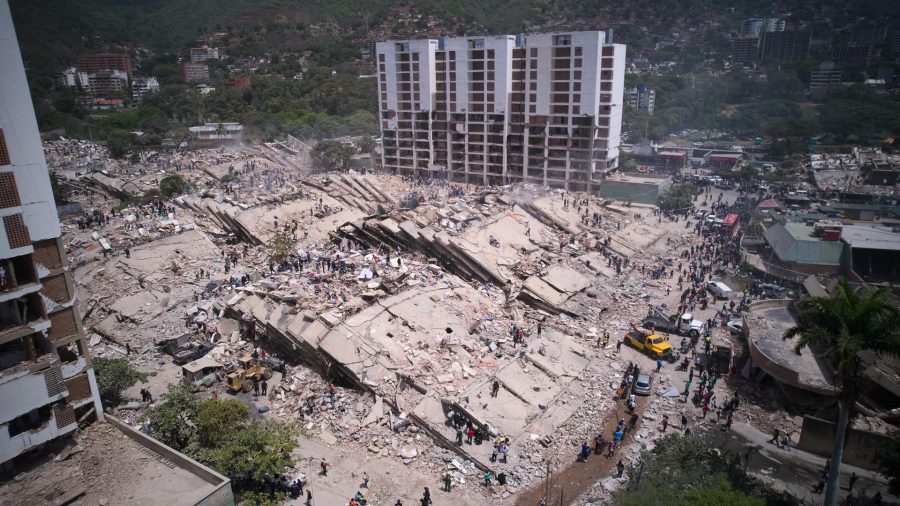
La Guaira, north of Caracas, has reported some of the most severe damage. Homes, residential buildings and health care centers in the area were destroyed or heavily damaged as families and rescuers search through the rubble for survivors.

U.S. aid includes funding, rescue teams and logistical support
The U.S. package includes $150 million in humanitarian assistance for aid organizations, faith-based groups and international agencies responding to the disaster.

The response also includes specialized search and rescue teams, emergency personnel and logistical support to move critical supplies into the country.
Part of the aid will go toward food, water, medical assistance, shelter materials, hygiene supplies and support for emergency operations in affected areas.
Damage to airport and road infrastructure has made it harder to bring in personnel, equipment and supplies. Venezuelan authorities restricted access to La Guaira after traffic and crowds in the affected area interfered with the movement of emergency vehicles.
La Guaira remains under restricted access
More than 14,000 military and police personnel were deployed in La Guaira to support patrols, health controls and access to the hardest-hit areas.
Authorities limited entry to the region and set up controls for authorized teams. The measure is intended to clear routes for ambulances, rescuers, machinery and vehicles carrying aid.
In several areas, neighbors and volunteers began removing debris on their own amid a shortage of heavy equipment and official rescue teams in the first hours after the disaster.
The search is taking place within a critical window. In earthquakes of this magnitude, the first 48 to 72 hours often offer the best chance of rescuing people alive, though survival can extend longer if victims have access to air, water or protected spaces under the rubble.
International organizations estimate millions could be affected
The International Organization for Migration estimated that up to 6.76 million people could be affected by the earthquakes, including about 2 million in Caracas.
The impact includes displaced people, uninhabitable homes, overwhelmed or damaged hospitals, power outages, water shortages and difficulty accessing food, medicine and other basic goods.
In areas such as Maiquetía, Catia La Mar and communities near Caracas, residents have lined up outside stores and pharmacies, while others remain in makeshift shelters, parking lots or open spaces for fear of aftershocks and further collapses.
Some areas continue to have power outages or intermittent service. In La Guaira and areas near the epicenter, electricity restoration is advancing only partially.
Foreign teams join rescue efforts
Venezuela received rescue teams and volunteers from several countries, including Mexico, the United States, El Salvador, Switzerland and Colombia.
Venezuelan authorities reported the arrival of more than 1,600 foreign rescuers and international flights carrying personnel and supplies. More aid flights are expected in the coming hours.
Humanitarian organizations began mobilizing food, water, hygiene supplies, shelter materials and medical equipment. Global Empowerment Mission is working with local partners to establish distribution centers in affected areas and support hospitals with medical supplies.
Samaritan’s Purse reported sending a disaster response team, emergency supplies, shelter materials, solar lights, blankets and a field hospital capable of treating more than 100 people a day.
Hospitals and basic services face pressure after the quakes
Medical response is one of the most urgent needs in the areas hit by the earthquakes.
Health centers in La Guaira report overcrowding as injured people arrive, with some patients without access to beds and others treated in makeshift conditions. The lack of equipment, space and supplies is adding pressure to a health system that already faced limitations before the disaster.
Beyond immediate care for the injured, humanitarian organizations have identified needs for safe water, sanitation, temporary shelter, medicine, surgical equipment and support to restore basic services.
Recovery could take months. After the initial rescue phase, priorities will include medical care, infrastructure repairs, support for displaced families and measures to reduce risks if new aftershocks occur.
The death toll could continue to rise
The official death toll has reached at least 920, but reports of missing people exceed 51,000. Authorities and humanitarian organizations warn that some reports could be duplicates or include people who are unreachable because of phone, power or internet outages.
The number of injured is above 3,300, and search efforts continue in collapsed buildings, damaged homes and areas where access remains limited.
The June 24 earthquakes are among the strongest recorded in Venezuela in more than a century. International attention is now focused on rescuing survivors, bringing in humanitarian aid and sustaining assistance in the coming weeks.
Stay in the know with stories that matter — visit HolaAmericaNews.com for the latest news, culture and community updates.
Facebook Comments