



Hola Iowa
The change takes effect July 1 on some state highways and paved rural roads; the Iowa DOT asked drivers to follow the posted speed limit until signs are updated.
Iowa will have a new 60 mph speed limit beginning Wednesday, July 1, on some state highways and paved rural roads, but the change will not apply immediately to every stretch currently posted at 55 mph.

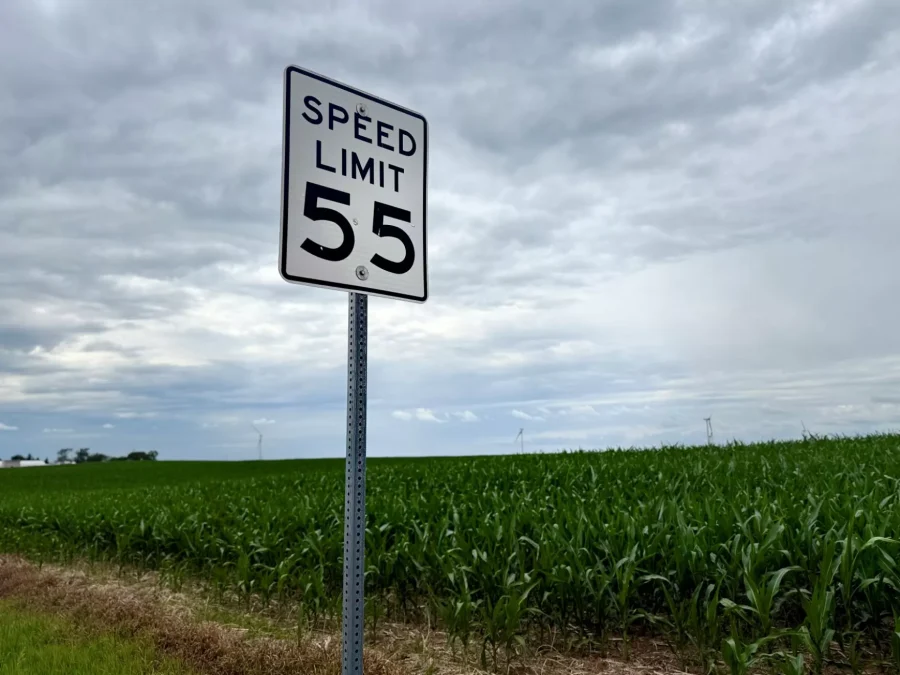
The Iowa Department of Transportation estimates it will take at least one week to update about 1,800 state signs. On county roads, the process could take longer because about 3,500 signs need to be modified.
The posted limit will remain the legal speed
The new law raises Iowa’s default speed limit for vehicle traffic from 55 to 60 mph, except where other speed restrictions are in place. The change is part of Senate File 378, signed by Gov. Kim Reynolds as part of a package of laws approved at the end of the 2026 legislative session.

Although the law takes effect July 1, drivers will continue to see 55 mph signs on many roads during the first few days. The Iowa DOT will use aluminum overlays on existing signs to show the new limit on roads under its jurisdiction.

Daniel Yeh, director of government and community relations at the Iowa DOT, said the agency wants motorists to follow the posted limit.
“Not every 55 mph road is going to increase to 60. Some of the roads will not increase, because we already have a study — or will have a study very soon — that says they need to stay at 55,” Yeh said.

The Iowa State Patrol also reminded drivers to obey the speed limit shown on the sign until the change is posted on the road.
The change will affect state highways and paved rural roads
The increase will apply on some two-lane state highways, numbered routes and paved rural roads. It does not automatically change every speed limit in Iowa or remove specific restrictions in residential areas, school zones, curves, urban areas or other stretches with particular road conditions.
Unpaved rural gravel roads will remain at 55 mph because they are regulated under a different section of state code.
In the counties, the change will move more slowly. Local officials will have to review signs, costs and road conditions before completing the transition. In some places, counties plan to use stickers or temporary overlays instead of replacing entire signs.
Supreme Court upholds birthright citizenship in the United States
Counties warn of costs tied to thousands of signs
The Legislative Services Agency estimated that updating all signs statewide will cost about $825,000. Some county leaders have expressed concern about the expense, especially because the law does not include specific funding to cover the local work.
In Woodbury County, County Engineer Laura Sievers said during a June 23 meeting that modifying signs could take months and cost thousands of dollars. The county plans to use stickers to cover the old numbers instead of replacing every sign.
“We’re trying to survive this change, that does nickel and dime our budget quite a bit here and there,” Sievers said.
Brian Moore, executive director of the Iowa County Engineers Association Service Bureau, said more review is also needed to determine whether curves and passing zones need adjustments because of the new limit.
“People need to be patient with the state and the counties as they work through getting the signage out appropriately,” Moore said.
Road safety remains part of the debate
The higher speed limit has also kept safety concerns in focus. Local officials and road safety advocates have questioned whether higher speeds could lead to more serious crashes, especially on rural two-lane highways where drivers may encounter slow-moving farm equipment.
A 2019 study by the Insurance Institute for Highway Safety found that increasing speed limits by 5 mph was linked to a measurable increase in traffic deaths. The U.S. Department of Transportation also reported that speeding was a factor in about 20% of fatal crashes in Iowa between 2014 and 2023.
Rick Young, a Hamilton County supervisor, told Radio Iowa that the increase could affect progress made on road safety.
“We have lowered the death rate on highways, compared to multiple years prior, so it’s unfortunate,” Young said. “Many of us believe that the Legislature chose to do that for the lack of safety.”
Reynolds defended the measure when she signed the law and said the change reflects what she has heard from Iowa residents.
“This is grassroots-driven,” Reynolds said. “If you look at social media, they’re pretty excited that it’s going to be legal to drive what they’ve been driving.”
The change comes after another major road safety adjustment: Iowa banned the use of handheld electronic devices while driving. After that measure, the state recorded its lowest annual number of traffic deaths in a century. According to the Iowa DOT, 260 people died on Iowa roads in 2025, about 100 fewer than the previous year.
What changes starting July 1
Effective date: Wednesday, July 1, 2026.
New default limit: 60 mph on some state highways and paved rural roads.
State signs to be updated: about 1,800.
County signs to be modified: approximately 3,500.
Rural gravel roads: remain at 55 mph.
Rule for drivers: the posted limit on the sign remains in effect until it is updated.
The Iowa DOT expects to complete the update of state signs in at least one week. On county roads, the change could take longer depending on the number of signs, local costs and safety reviews for each stretch.
Stay connected to the stories that matter: visit HolaAmericaNews.com for the latest news, culture and community updates.
Facebook Comments