




By Kevin Baskins, Des Moines Register
- Iowa business leaders maintain positive but cautious economic outlook for the next six months.
- Concerns exist regarding inflation, tariffs,and workforce challenges.
- Despite a decline in GDP and manufacturing jobs, businesses expect to increase hiring.
- The need for workforce housing, especially in rural areas, is a significant concern.
The latest survey of business leaders in Iowa shows lower expectations for sales and capital spending but still anticipates an increase in hiring.

The Iowa Business Council (IBC) released its second quarter Economic Outlook Survey on Wednesday, July 2, which measures the expectations of decision-makers at 21 of Iowa’s largest employers for sales, capital spending and employment for the next six months.
The survey’s overall economic outlook scored at 57.41 points, essentially flat from the previous survey released in April and 2.95 points below the historical average of 60.36. A measurement of over 50 points indicates positive sentiment.

“The business climate in Iowa seems to be trending in similar fashion to the rest of the country. Iowa businesses have enjoyed an extended run of success in recent years,” stated Gage Kent, CEO of KENT WORLDWIDE® and Chairman of the Iowa Business Council in a press release. “We are not immune, however, to cycling due to factors such as inflation, talk of tariff negotiations, and tax policy uncertainty. Nonetheless, we remain very optimistic about future growth prospects.”
Optimism among Iowa business executives comes at a time when key measures of Iowa’s economy continue to face headwinds as the state’s reliance on a depressed farm economy has also weighed down other sectors such as manufacturing.

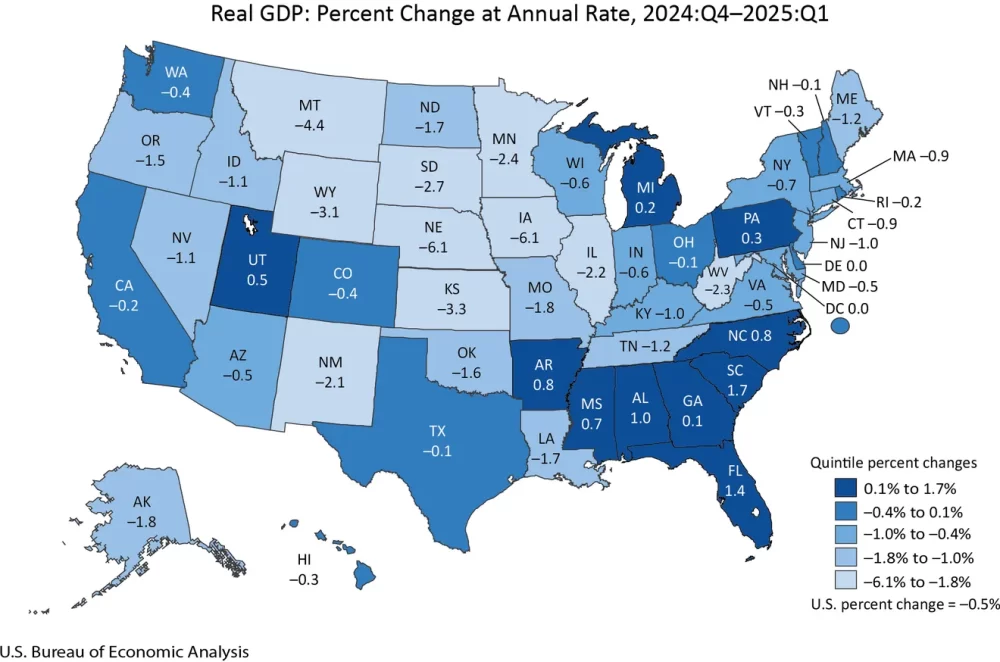
A report by the U.S. Bureau of Economic Analysis (BEA) on June 27 indicates Iowa’s Gross Domestic Product (GDP) fell 6.1% in the first quarter of 2025, matching only Nebraska for being the worst in the country.
BEA’s report noted that the category of agriculture, forestry, fishing and hunting had decreased in 39 states but had a greater impact on 11 states including Iowa.
Earlier in June, WalletHub published a study crowning Iowa as having the worst economy in the U.S., however some Iowa economists did question the conclusion saying that the weighting of measures used to reach that finding were subjective and therefore open to bias.
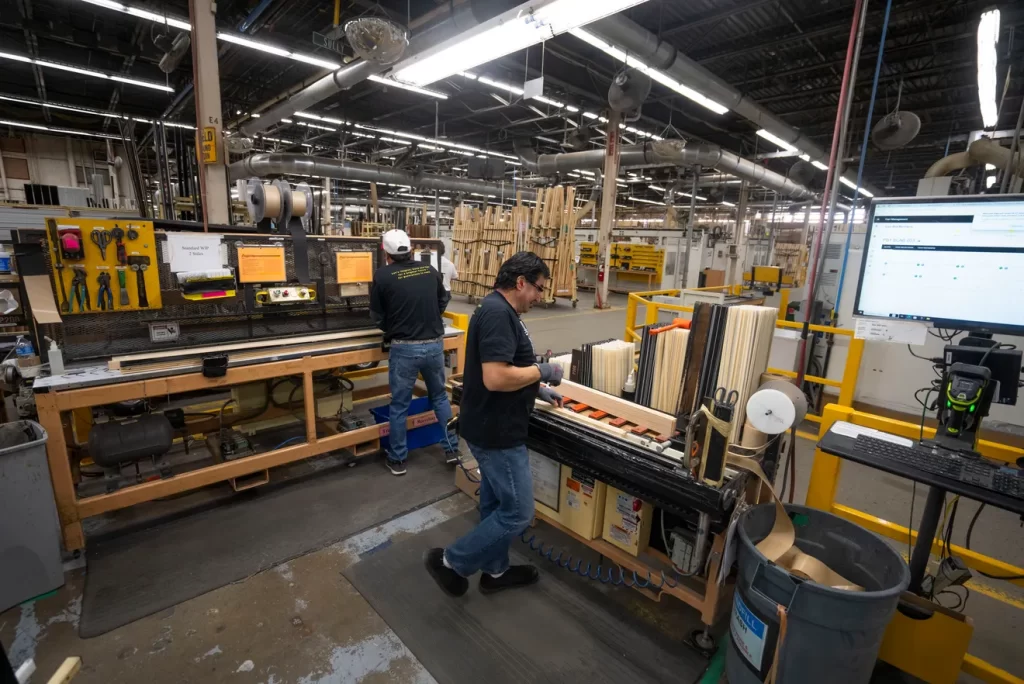
Manufacturing in Iowa has experienced the most notable downturn in the last 12 months with the loss of 8,400 jobs, including 5,900 in the durable goods category, during the last 12 months, according to the most recent Iowa Workforce Development unemployment report, issued June 19.

The monthly Mid-America Business Conditions Index released Monday July 1 by Creighton University noted Iowa’s Business Conditions Index declined in June from May including a drop in the state’s exports from $5 billion in the first four months of 2025 compared to $5.4 billion for the same period in 2024, an 8.1% decline.
In a June interview with the Des Moines Register, Austan Goolsbee, president and CEO of the Chicago Federal Reserve, said Iowa was number four in the nation in terms of states affected by tariffs.
“But it’s not a surprise. (There’s) a lot of manufacturing, a lot of agriculture, both of which rely on supply and have a supply chain that relies on a lot of imported stuff and also heavily turned to export markets for their output,” Goolsbee said at the time.

Uncertainty regarding the impact of tariffs is still on the minds of Iowa executives, said Joe Murphy, IBC president.
Murphy said even if companies aren’t directly affected by tariffs, some of their suppliers and clients can still be impacted.
“As a result, they are then indirectly impacted by tariffs. The hope is that we get some certainty around tariffs and trade policy quickly,” Murphy said.
Murphy said it is interesting that 56% of the respondents expressed concern about workforce attraction and retention even though its has been a consistent challenge for businesses cited in previous surveys.
“But the fact that it’s kicked up in the 50% range at 56%, I think is significant. When that ticks up, I think it makes sense that employment expectations will increase a bit as well,” Murphy said of why employment expectations went up even though sales and capital expenditure expectations went down.
Murphy said IBC would like to see more emphasis put on developing workforce housing particularly in rural areas pointing out that the Iowa Economic Development Authority has estimated Iowa needs about 57,000 new housing units by 2030.
“If people can’t find housing near where they work, they’re not going to be able to work in those areas, right? People don’t want long commutes and the problem I think really boils down to workforce housing,” Murphy said.
While uncertainty continues to influence business decisions, IBC’s long-term outlook for growth and opportunity in Iowa remains strong, Murphy said.
Stay in the know with stories that matter — visit HolaAmericaNews.com for the latest news, culture, and community updates!
Facebook Comments