

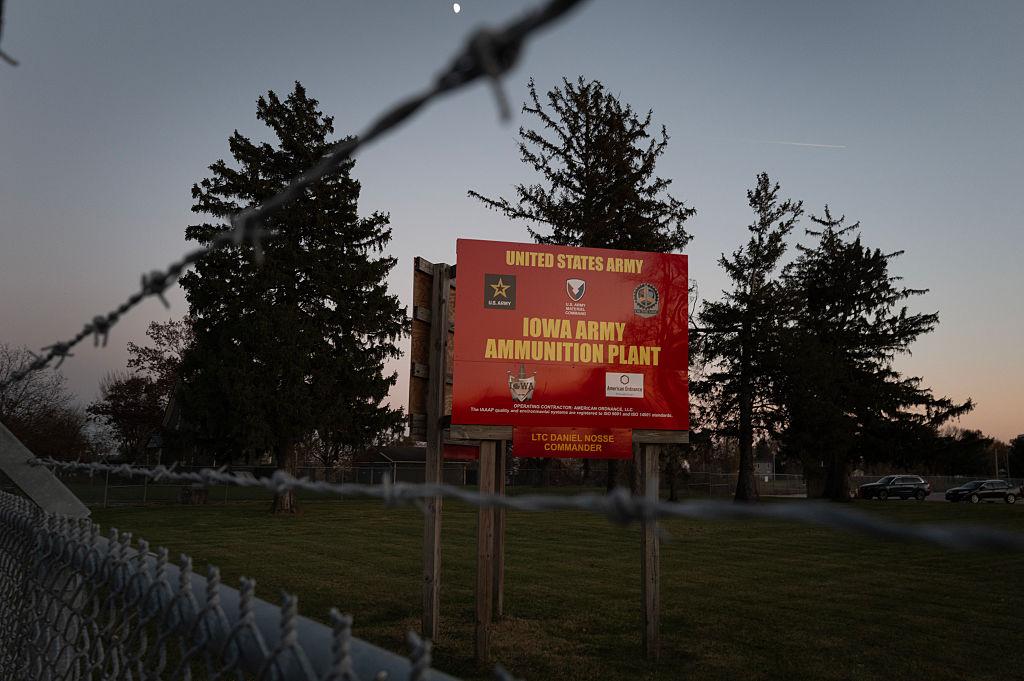



Illinois environmental officials do not expect Wednesday’s lead dust plume to reach their state under current weather projections. Emergency notifications have been issued in southeast Iowa.
The U.S. Army plans to proceed with the controlled detonation of deteriorating lead azide at the Iowa Army Ammunition Plant in Middletown, Des Moines County, on Wednesday, Nov. 25, 2026, after a federal appeals court lifted a temporary suspension of the operation’s environmental permit.
An emergency alert sent Tuesday morning identified 9 a.m. Central Time on Wednesday as the planned start, according to the Associated Press. The operation remains subject to weather and safety conditions.

The Army reaffirmed its plans late Monday following President Donald Trump’s intervention and the subsequent court ruling. Acting Army Secretary Adam Telle said the decision reflected agreement among the federal agencies involved, while Iowa’s current and incoming governors maintained that the determination belongs to federal experts.
The operation is intended to dispose of nearly five tons of degraded lead azide stored at the installation for more than two decades. Federal authorities maintain that moving the deteriorating material would create an unacceptable safety risk.
Emergency alerts issued for communities near Middletown
Tuesday’s emergency notification indicated that some residents within five miles southwest of the installation could be evacuated. The alert also advised people up to 20 miles away to remain indoors with their windows closed during the operation.
These precautions do not establish the boundaries of potential lead contamination. Airborne exposure and the deposition of lead dust depend on weather conditions, and the affected areas may extend beyond the immediate vicinity of the ammunition plant.

Local evacuation instructions take precedence over general shelter-in-place recommendations. The earlier evacuation hours and temporary accommodation arrangements announced for Nov. 20 should not be treated as confirmed for Nov. 25.
The Army’s installation community notifications provide access to public advisories and exposure maps. Iowa Homeland Security and Emergency Management is coordinating information from federal and state agencies through its Iowa Army Munitions Disposition Resources page.

Iowa Poison Control Center issues lead exposure precautions
The primary public health concerns are inhaling airborne lead particles and coming into contact with contaminated dust deposited on outdoor surfaces, vehicles, buildings and soil.
The Iowa Poison Control Center recommends the following precautions in potentially affected areas:

- Remain indoors during the operation. Iowa health officials recommend keeping windows and exterior doors closed for 24 to 48 hours afterward unless updated guidance indicates otherwise.
- Minimize outdoor air intake by adjusting ventilation systems to recirculate indoor air when appropriate. Portable HEPA air cleaners may also help.
- Avoid unnecessary travel through potentially affected communities. Use the vehicle’s air recirculation setting if travel is necessary.
- After authorities announce that the airborne exposure period has ended, wash potentially contaminated surfaces with soap and water rather than dry sweeping or dusting.
- Wash hands frequently, remove shoes before entering homes and thoroughly wash garden produce.
- Limit children’s contact with bare soil, mulch and wood chips until environmental testing results are available.
Children younger than six, pregnant individuals and breastfeeding individuals are particularly vulnerable to lead exposure.
The Poison Control Center advises that possible exposure without symptoms generally does not require emergency treatment. A healthcare provider can determine whether blood lead testing is appropriate based on an individual’s exposure history and environmental sampling results.
Anyone experiencing confusion or unusual sleepiness following potential exposure should receive immediate emergency medical evaluation. The Iowa Poison Control Center operates 24 hours a day at 1-800-222-1222.
Related: Iowa Detonations Set for Nov. 25; Schools and Evacuation
Illinois does not expect lead dust plume to reach the state
As of 8:30 a.m. Central Time on Nov. 24, the Illinois Environmental Protection Agency reported that current meteorological projections do not indicate impacts from Wednesday’s plume in Illinois.
Earlier projections had identified possible exposure in western and central Illinois. Gov. JB Pritzker requested additional modeling and information from federal authorities as state agencies prepared for potential contamination.
The revised forecast is not a guarantee that Illinois will remain unaffected. Illinois EPA and the Illinois Emergency Management Agency and Office of Homeland Security will continue monitoring changes in weather and operational plans.
Illinois has also published separate public health recommendations for schools, child care facilities, livestock producers and pet owners in potentially affected areas.
Iowa agriculture officials recommend protecting livestock and feed
The Iowa Department of Agriculture and Land Stewardship recommends moving livestock away from potentially affected areas or sheltering animals indoors when feasible without compromising their safety.
Feed, hay and portable water supplies should be moved indoors or covered to reduce possible contamination. Livestock should remain sheltered until authorities announce that the airborne plume has passed through their area.
The department also recommends discussing baseline lead testing with a veterinarian and requesting soil and forage sampling from the Army before and after the operation.
Federal appeals court lifts temporary suspension of EPA permit
On Monday, Nov. 23, the U.S. Court of Appeals for the Eighth Circuit denied an emergency motion filed by the Iowa Environmental Council and Sierra Club seeking to suspend the Environmental Protection Agency’s hazardous waste permit.
In its opinion in case No. 26-3374, the three-judge panel concluded that the organizations had not demonstrated that they were likely to prevail in their challenge or that the circumstances justified continuing the emergency suspension.
The judges acknowledged the environmental and public health risks associated with the planned operation. They also weighed those risks against the consequences of an uncontrolled explosion without the protections required by the EPA permit.
The decision lifts the administrative stay imposed on Nov. 19. It does not resolve the underlying challenge to the permit or establish that the operation will have no environmental consequences.
The EPA emergency permit is effective from Nov. 13, 2026, through Feb. 11, 2027. It requires environmental monitoring and sampling, public notifications, cleanup and reporting.
The Iowa Environmental Council and Sierra Club, represented by Earthjustice, have argued that federal authorities failed to adequately communicate the risks to affected communities and sufficiently evaluate alternative disposal methods.
In a Nov. 22 statement, the organizations also questioned why the material had been allowed to deteriorate over several decades.
Trump sought agreement from Gov.-elect Rob Sand
Before the appeals court issued its decision Monday, Trump said he had instructed the military not to proceed until the court agreed the operation could move forward. He also sought approval from Iowa’s incoming Democratic governor, Rob Sand.
Sand maintained that the decision rests with the federal administration and the specialists responsible for evaluating the emergency. He called for federal authorities to release the information they had shared with him about the situation and the proposed disposal method.
Sand remains Iowa’s state auditor and will not assume the governorship until January 2027.
Gov. Kim Reynolds activated Iowa’s State Emergency Operations Center on Nov. 20. In a Nov. 22 statement, her office confirmed that state agencies were coordinating preparations with federal officials and other emergency response partners.
Reynolds expressed support for the planned operation Tuesday after discussions with federal military leaders, according to the Associated Press.
Timeline: From the March discovery to the Nov. 25 detonation plan
- March 2026: The Army identifies deteriorating lead azide at the Middletown installation and determines that the material has become unstable.
- Oct. 15: The Army holds a public open house in Middletown to discuss the disposal plan. The Army reports that nearly 200 residents and community leaders attend.
- Nov. 13: The EPA issues an emergency hazardous waste permit authorizing the controlled disposal operation.
- Nov. 15: The Army publicly schedules the operation for Friday, Nov. 20, and releases guidance about potential lead exposure.
- Nov. 19: The Iowa Environmental Council and Sierra Club file a legal challenge to the EPA permit. Acting Army Secretary Adam Telle moves the operation to Nov. 23. The appeals court issues an administrative stay of the permit.
- Nov. 20: Reynolds activates the State Emergency Operations Center.
- Nov. 21: The Justice Department informs the court that the Army intends to invoke emergency regulatory provisions if the permit remains suspended.
- Nov. 22: The Army reschedules the operation for Nov. 25, citing more favorable weather and additional time for safety preparations.
- Nov. 23: Trump directs the Army to wait for judicial approval and seeks Sand’s agreement. The appeals court lifts its stay, and the Army subsequently reaffirms its intention to proceed Wednesday.
- Nov. 24: Emergency notifications identify Wednesday morning as the planned time of the operation.
Federal officials also scheduled a joint public briefing in Middletown for Nov. 24 involving representatives from the Army, Federal Emergency Management Agency, EPA and other federal agencies.
Related: Army Reschedules Iowa Detonation for Nov. 25
EPA requires environmental monitoring and cleanup after detonation
Lead particles deposited on outdoor surfaces and agricultural land could remain a source of exposure after the airborne plume has passed.
Environmental sampling will help determine where contamination occurred and what cleanup measures are necessary. Forecast maps identify potential exposure areas but do not establish measured contamination levels.
Illinois EPA reported Tuesday that the federal EPA plans to publish a public dashboard with data related to the operation.
The EPA’s Iowa Army Ammunition Plant response page provides access to federal environmental information. Questions related to the environmental response can be directed to [email protected].
Stay in the know with stories that matter — visit HolaAmericaNews.com for the latest news, culture and community updates!
Facebook Comments