
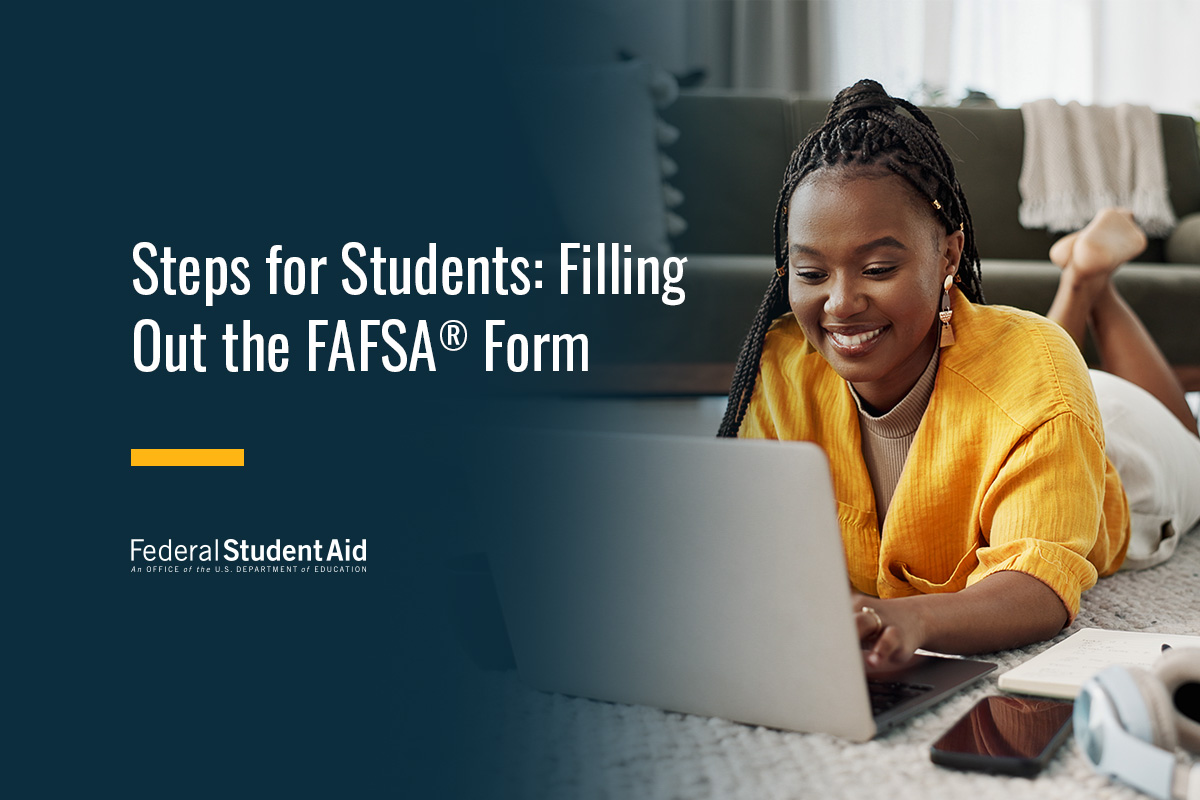



The federal aid form opened Sept. 23 and uses 2025 tax information. Parents without a Social Security number can still create an account and complete their required section.
The 2027–28 FAFSA is now open, allowing Iowa students to apply for federal, state and college financial aid for the academic year that runs from July 1, 2027, through June 30, 2028.
The Free Application for Federal Student Aid became available to the public on Sept. 23, 2026. Students can complete the form at FAFSA.gov.

The application can be used to determine eligibility for grants, scholarships, work-study and federal student loans. Iowa also uses FAFSA information for some state financial aid programs.
Students applying for aid for the 2027–28 school year need to select the 2027–28 FAFSA form. That form uses income and federal tax information from 2025.

The 2027–28 FAFSA covers school from July 2027 through June 2028
The FAFSA year must match the academic period in which the student plans to attend college, a career school or a trade school.
- 2027–28 FAFSA: for attendance from July 1, 2027, through June 30, 2028.
- 2026–27 FAFSA: for attendance from July 1, 2026, through June 30, 2027.
Students planning to attend a summer session may need a different FAFSA year depending on the school. Federal Student Aid recommends checking directly with the institution’s financial aid office before submitting a form for summer enrollment.

Students and FAFSA contributors need separate StudentAid.gov accounts
Students need their own StudentAid.gov account to access and submit the FAFSA online.
Other people who are required to provide information on the application are called contributors. Depending on the student’s situation, a contributor may be a parent, stepparent or spouse.
Each contributor must use a separate StudentAid.gov account. Parents and students should not share the same login or create one account for the entire family.
For dependent students, at least one parent will generally be required to provide information. Federal Student Aid also offers a Who’s My FAFSA Parent? tool to help families determine which parent needs to participate, including when parents are divorced or separated.

Parents without a Social Security number can still complete the FAFSA
A parent, spouse or parent’s spouse does not need a Social Security number to create a StudentAid.gov account and complete a required section of the FAFSA.
When creating an account, a contributor who does not have an SSN can select the option indicating that they do not have a Social Security number and follow the identity verification process.
The student and each required contributor must also provide consent and approval for federal tax information to be transferred from the IRS when required. This applies even when a parent does not have an SSN, did not file a U.S. tax return or filed taxes outside the United States.
If a required contributor does not provide that consent and approval, the student cannot receive federal student aid through the FAFSA process.
The 2027–28 FAFSA uses 2025 income and tax information
The 2027–28 application uses income and federal tax return information from 2025.
Federal tax information is generally transferred directly from the IRS after the student and other contributors provide the required consent. The tax information itself is not displayed on the FAFSA website or FAFSA Submission Summary.
The form also asks for the student’s or parent’s marital status as of the date the FAFSA is completed. Families whose marital status has changed since filing their 2025 taxes may need to provide information differently.
Iowa students can also apply for additional state financial aid
Some Iowa scholarships and grants require the Iowa Financial Aid Application in addition to the FAFSA.
After completing the FAFSA, Iowa students may see a prompt to continue to the state’s Eligibility Wizard. The short questionnaire determines whether the student may qualify for additional Iowa financial aid programs and provides instructions if another application is required.
The Iowa Department of Education also offers FAFSA assistance through its college access services. Students and families who need help can review Iowa FAFSA guidance and schedule help with a college coach.
College and state aid deadlines can arrive before the federal deadline
Submitting the FAFSA does not guarantee a financial aid award. Schools use the information on the form to determine the aid a student may qualify to receive.
College, state and federal FAFSA deadlines are different. Some schools and financial aid programs also have limited funding, so their priority deadlines can arrive well before the federal FAFSA closes.
Students applying to several colleges can list multiple schools on one FAFSA and later add or remove institutions if their plans change.
After a FAFSA is processed, the student can review the FAFSA Submission Summary, which includes FAFSA information and estimated federal aid eligibility. The student’s colleges make the final financial aid offers.
Related: Iowa private colleges expand financial aid options for students
Stay in the know with stories that matter — visit HolaAmericaNews.com for the latest news, culture and community updates!
Facebook Comments
