
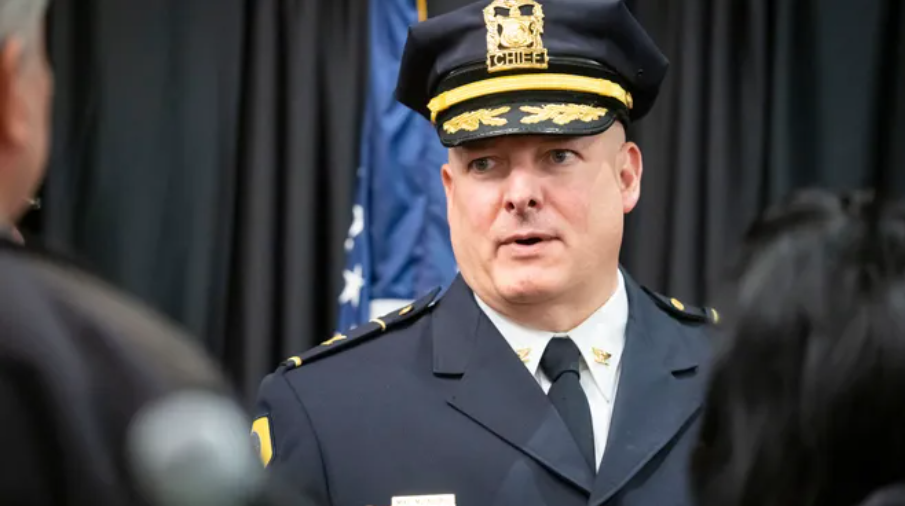



By F. Amanda Tugade, Des Moines Register
Des Moines Police Chief Michael McTaggart said he does not have enough police officers to help federal immigration authorities with a “roundup” but his department will step in if and when people’s safety are at risk.

“If somebody is calling for help and it’s an emergency, we’re going to help them,” McTaggart said to residents at a community forum Tuesday, Oct. 7, while responding to questions on the department’s relationship with U.S. Immigration and Customs Enforcement. “So, whether it’s ICE, ATF or grandma on the street, and they’re calling for help and it’s an emergency, we’re going to go help them and make sure they’re safe.”
The event — Iowa Citizens for Community Improvement’s second with the chief in the year since he was hired as the top cop — was held in the basement of Saint Paul AME Church on Des Moines’ northwest side. The local organization held its first Q&A with the chief in March, where he faced similar inquiries about ICE.
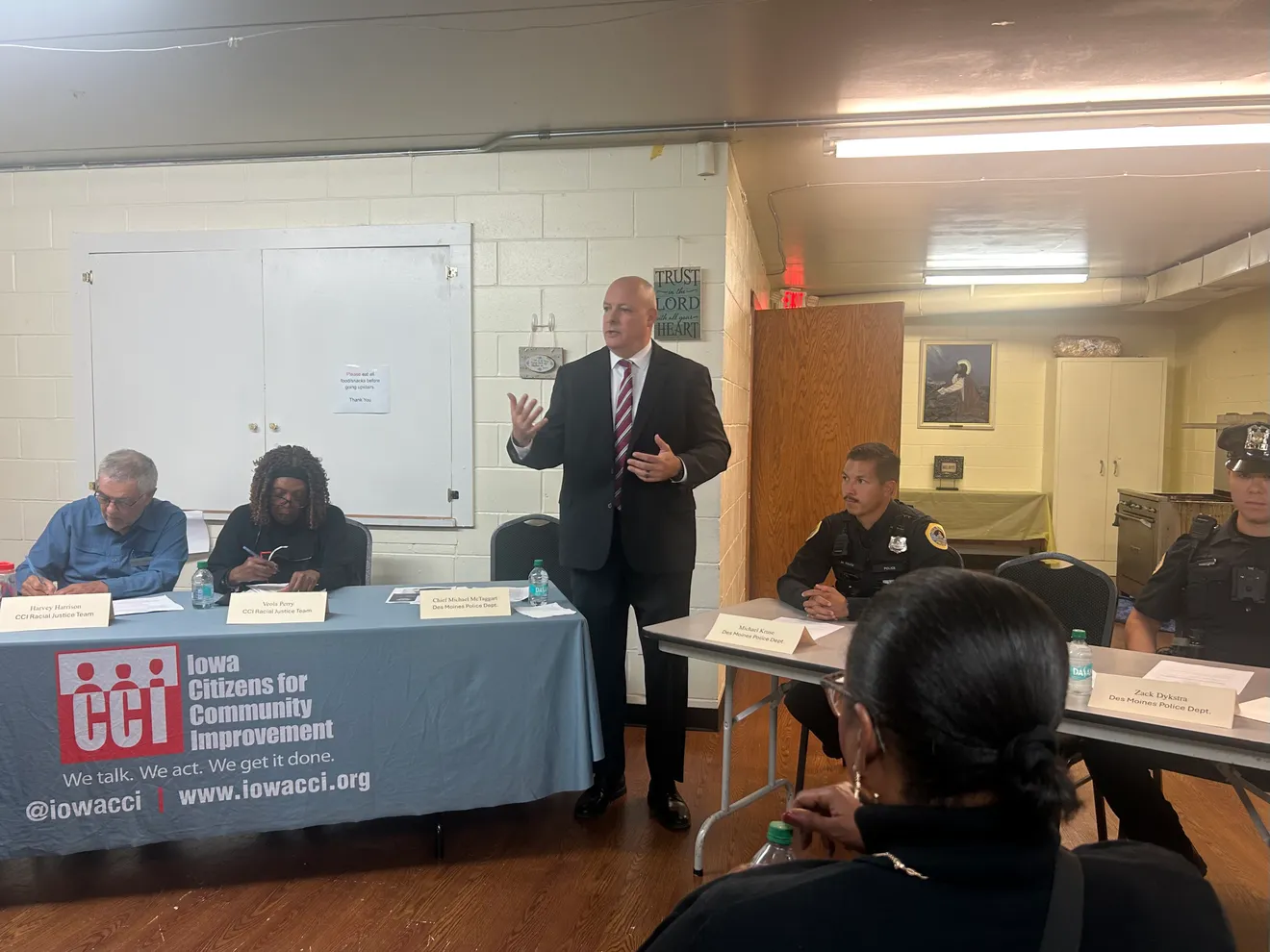
At the Oct. 7 meeting, he doubled down on responses, telling more than 20 residents that ICE has “never asked” his department for assistance. The two DMPD detectives outside Ian Roberts’ home Sept. 26 were there to notify officials from the Bureau of Alcohol, Tobacco, Firearms, and Explosives about protesters, McTaggart said.
They were “worried” protesters would show up as federal agents searched the former Des Moines Public Schools superintendent’s home, he added.

Here are other takeaways from the meeting.
DMPD to launch five-year strategic plan
The department is looking to unveil its five-year strategic plan in the coming weeks. Creating the plan — which McTaggart said aligns with the recommendations made by consulting firm 21st Century Policing Solutions (21 CP) — was a new venture.

“Strategic plans — the Des Moines Police Department has never had one before as far as I can tell. It’s my 27th year. We’ve never had one,” McTaggart said.
The plan involves six categories, including improvements around community outreach, as well as officer engagement and training. Each of the six individuals selected to take on the categories are called “role champions” and will form teams to help meet goals, McTaggart explained.
Goals will be adjusted annually if the department falls short.
“Let’s say one of the strategic goals is we increase our cadet numbers by two a year,” he told the crowd. “(If) in year one, we only get one, then we have to alter that goal a little bit and say, ‘OK, next year we’re looking for three.'”
In the next two to three weeks, DMPD officers will be asked to familiarize themselves with the plan, so they can inform residents if and when questions arise.
“That’s the point of it,” he said. “Everybody’s on the same boat, rowing in the same direction, so we’re excited about that.”
On the camping ban, the number of unsheltered people fined or arrested has ‘been about zero’
McTaggart also answered questions from a resident who asked about the impact of Des Moines’ ordinances banning people from sleeping in public places and reducing the number of days they would have to remove their belongings from those spaces.
“If you wanted tickets and arrests, you would be very disappointed, because it’s been about zero,” McTaggart told Dudley Mohammad, a candidate for Des Moines City Council Ward 1.
The chief added officers have been able to work with people who are unsheltered and camping in parks or other areas and “get compliance” without issuing a ticket or an arrest.
“So, it was actually pretty ineffective to make that?” Mohammad asked about the camping ban.
McTaggart said the new ordinance has allowed officers to respond to complaints from residents about certain areas “that were not clean” or made the parks unusable.
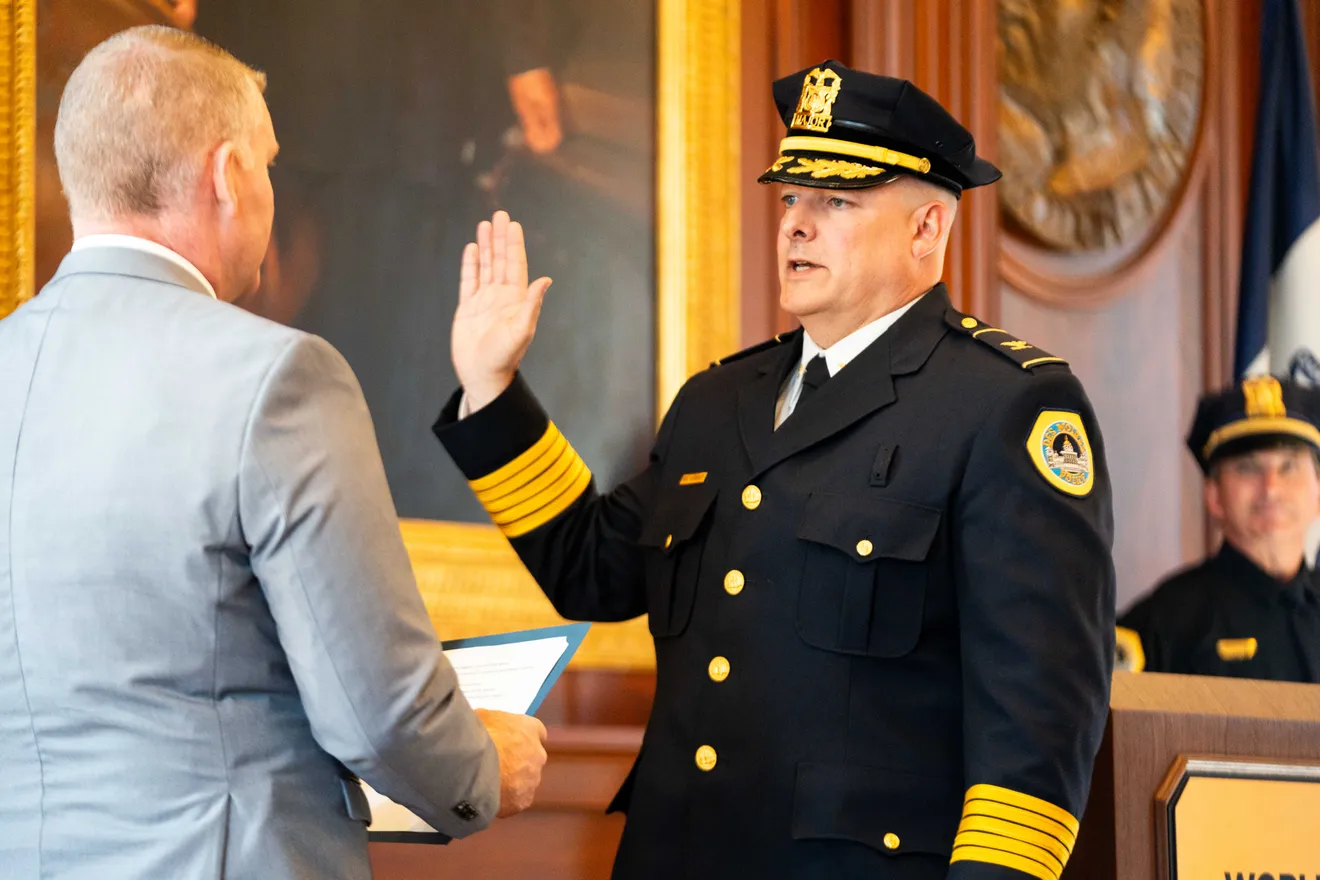
Cody Scanlan/The Register
Comunity policing and recruiting new officers
At the forum, McTaggart continued to share his vision for the department. He briefly spoke of the challenges in recruiting young adults — mostly those in their early 20s — to join the police force and the ways the department is trying to reach them. He also believes in hiring officers who are from the communities they plan to serve.
“If you can get people from your community to apply for your police deparment, your fire department, whatever it is, that’s a win. So anytime we can do that, it’s great,” he said.
McTaggart also opened up about the value of community policing and assigning the officers to neighborhoods to build stronger relationships with residents. It’s an effort, he added, that will start in January, pending union contract agreements.
As a patrol officer on a beat, McTaggart said he was aware of the ins and outs of the area he was assigned to cover.
“I knew what was going on, if there were issues, if there was some sort of event planned …” he said. “… If I’m only in your neighborhood once or twice a month, it doesn’t work like that.”
Stay in the know with stories that matter — visit HolaAmericaNews.com for the latest news, culture, and community updates!
Facebook Comments