



By Christina Fernández-Morrow, Hola America News
Cancer is the leading cause of death for Latinos in the United States and cervical cancer in particular poses an increasing risk to Latinas.

Advances in Medical Technology
In the 1970s routine Pap smears revolutionized cervical cancer detection, cutting incidence rates by 70%. But this progress hasn’t benefited everyone equally. Latinas, still have the second-highest diagnosis and death rates for cervical cancer.
Most concerning of all: while cervical cancer rates are decreasing for most groups, rates among younger Latinas are increasing by 2% per year.
Early Detection Saves Lives
When caught early, in its localized stage, the 5-year survival rate is 92%. But as the disease progresses, the odds decrease significantly.
- For regional cancer (spread to nearby areas): 59% survive.
- For distant cancer (spread throughout body): only 17% survive.
Latinx patients are more likely to be diagnosed with advanced-stage cervical cancer. This emphasizes a critical truth: early detection is lifesaving.

Barriers to Diagnosis and Treatment
The reasons behind this disparity are complex and deeply rooted in socioeconomic factors.
Lack of insurance
About 19% of Latinx patients don’t have health insurance, preventing access to:
- Regular Pap tests (recommended every three years for women 21-65 to identify changes to cells that can lead to cancer).
- HPV testing: human papilloma virus is the leading cause of cervical cancer.
- Follow-up care including a colonoscopy or biopsy for abnormal results.
- Treatment for diagnosed conditions.
Lack of insurance is the most frequently discussed financial hurdle in health care, but underinsurance also hinders many Latinas from seeking health services. In fact, studies have shown that compared to Latinas who are uninsured, those who are underinsured are even less likely to complete screenings on a regular basis or seek treatment.
The consequences are devastating: uninsured Latinx patients are 37% more likely to have cancer that has spread to nearby areas and 47% more likely to have distant-stage cancer when diagnosed.
Socioeconomic Barriers
Financial constraints extend beyond insurance.
Nealy 29% of Latinx patients live in low-income neighborhoods, limiting access to healthcare facilities and culturally competent providers. This often includes additional challenges like lack of reliable transportation, time off from work, and childcare issues.
Cultural Complexities
The Latinx community is not a monolith. Significant variations exist within the population. For example, Puerto Rican and Mexican women experience higher mortality rates and incidence rates than other Latinx subgroups. Puerto Rican women are also 48% more likely to be diagnosed with stage IV cancer compared to Mexican women.
Cultural beliefs, such as “fatalismo,” further complicate the issue. Fatalismo refers to the belief that an individual’s fate is predetermined and cannot be changed so they are unable to avoid cancer, or that cancer will certainly lead to death.
For some Latinas, religion plays a role. If they believe that one’s health is at God’s will, they may not schedule cancer screenings. However, in other cases, church attendance and involvement with church activities can encourage preventive behaviors and lead to social support and even financial assistance with healthcare costs.
Linguistic Factors
Finding linguistically competent healthcare providers remains a major challenge. Health information is most effective when delivered in a person’s native language by someone who understands their cultural context.
Symptoms and Diagnosis
Early-stage cervical cancer typically has no symptoms, making regular screenings essential. Later stages may involve abnormal vaginal bleeding, pain after intercourse, and heavy discharge. Diagnosis is confirmed through Pap smears and biopsies.
Prevention Is Critical
Pap tests: Pap tests can detect pre-cancerous cells in the cervix.
HPV vaccine: Recommended if you’re between 9 and 45 years old.
Cultural Understanding: Leverage values like “familismo,” a strong loyalty to the family to encourage individuals to seek preventions and treatment so they can be there for their family for years to come.
Religious Support: Partner with churches to strengthen social and emotional support.
Early Intervention: Use social media to communicate the importance of cervical cancer screening to younger Latinas.
Community Programs: “Ayudando a las Mujeres con Información, Guía y Amor para su Salud” is a bilingual educational outreach program proven to be effective in promoting cervical cancer screening among Latinas ages 21 to 65, supported by the CDC.
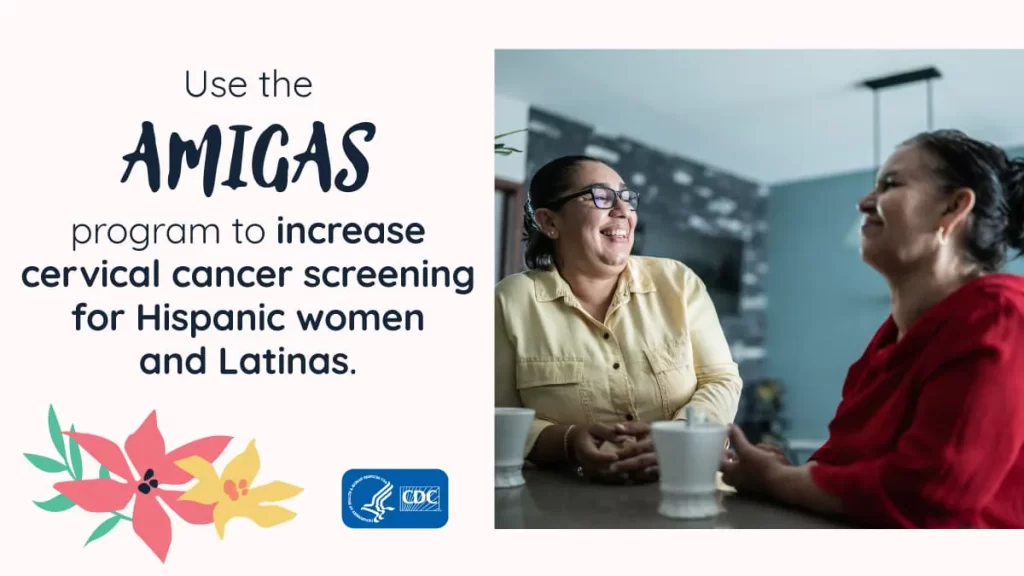
Cervical cancer is highly preventable, and early detection is the key to survival. By empowering Latinx communities with knowledge, access, and support, we can reduce barriers and ensure a future where every woman has the chance to thrive.
If you or someone you know hasn’t had a recent cervical cancer screening, make that appointment today. And please share this information with others—it could save a life.
No woman should die from a cancer that can be prevented.
Facebook Comments