




By Jonathan Turner, Hola Iowa
Alejandra Piña is riding high in a sport that is deeply meaningful to her as a Mexican-American.

The 31-year-old native of Torrance, Calif., who’s lived in Des Moines since 2007, is the U.S. national queen of Charrería, Mexican rodeo. Charrería is the official national sport and equestrian tradition of Mexico. Originating in the 16th century, it features skilled horseback riding, intricate roping, and cattle-handling routines practiced in specially designed arenas called lienzos charros. The competitions highlight both immense discipline and rich cultural heritage.
“Charrería is very animal-friendly. Our horses are our teammates and best partners,” Piña said recently. “Everything’s timed. Everything is looked upon. Every detail is organized because if anything happens to the animals, you can get sanctioned, you can get disqualified. We do use spurs. If the men tend to spur their horse too much and they’re bleeding, they’ll get disqualified.”

A former Iowa charrería queen, she’s the first Iowan to be crowned U.S. queen – May 1, 2026, at the season opener for the U.S. Mexican Rodeo Circuit in Phoenix, Ariz. Piña is the founder of Escaramuza Quetzalli in Des Moines.

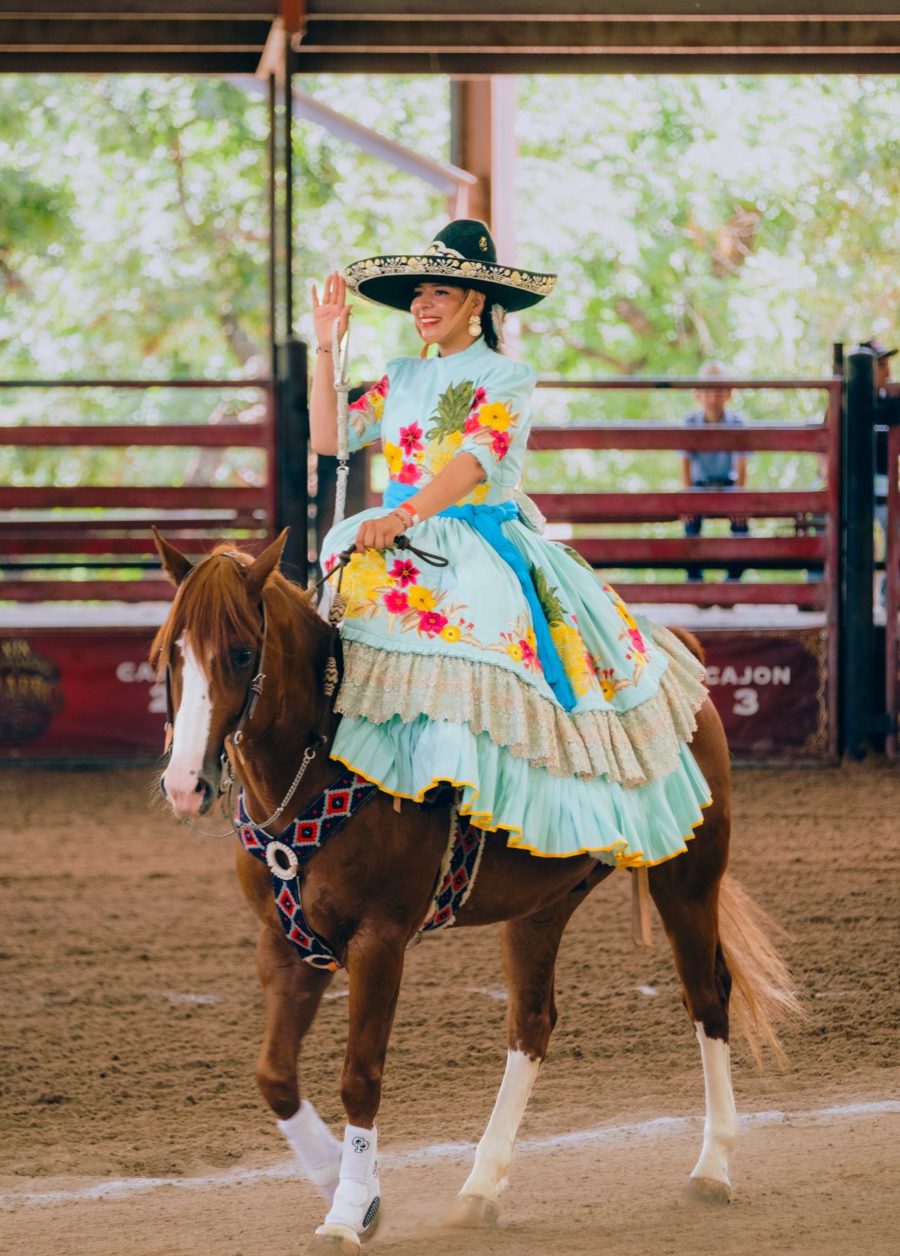
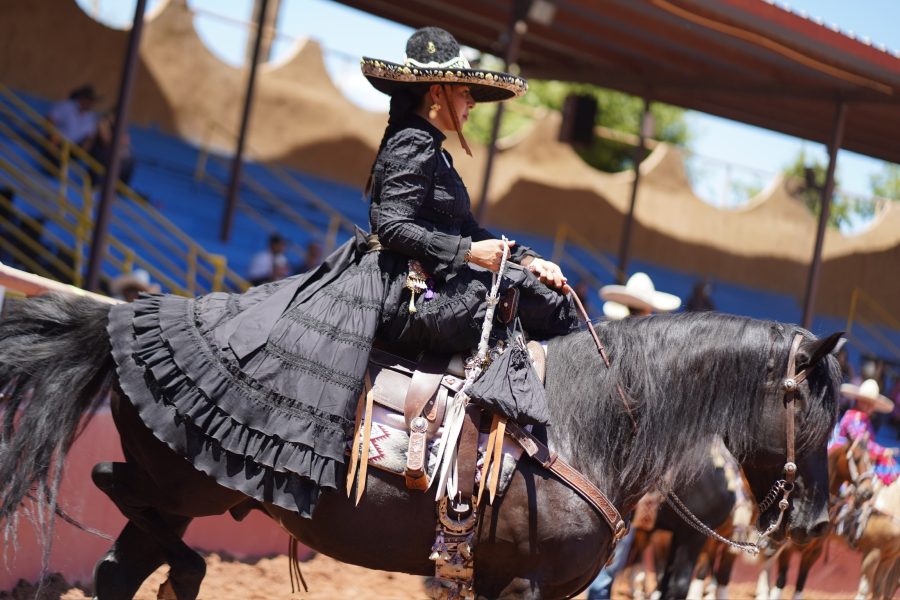
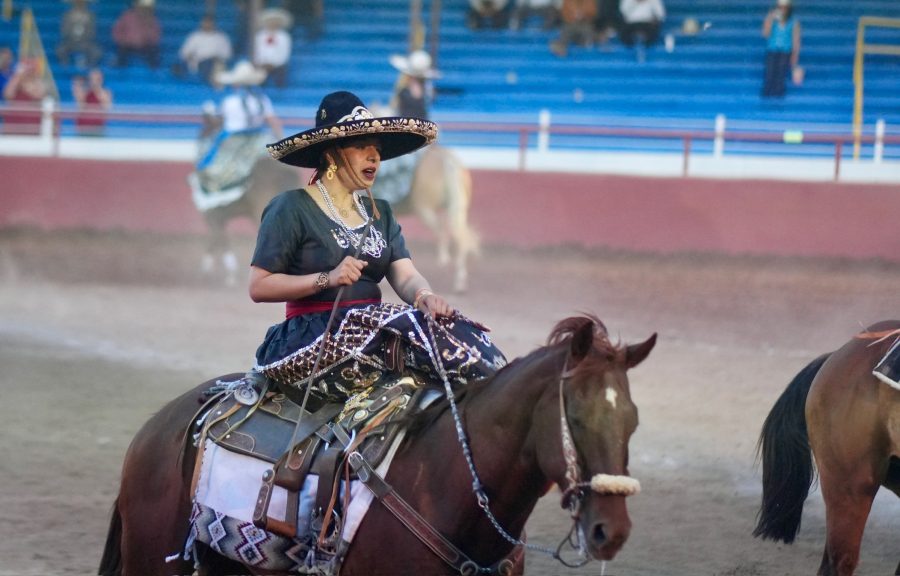
Escaramuza is the only female equestrian event in traditional charrería, consisting of a team of eight women performing highly synchronized, choreographed maneuvers on horseback to music. Often compared to synchronized swimming on horses, the riders gallop at high speeds, cross paths, and spin, all while riding side-saddle.
“Since I was six years old, horses have been a central part of my life,” Piña said. “My father instilled in me a deep love for charrería, taking me to floreo classes in California and encouraging me to embrace the traditions that have been passed down through generations of my family.” Her family traces its roots to historic charros of La Laguna del Carretero in Villanueva, Zacatecas.

“Among my proudest accomplishments are organizing Iowa’s first all-female charreada (competition) and leading the first Monumental Escaramuza presentation during the halftime show at the Iowa Horse Fair Rodeo. My goal is to continue inspiring future generations to embrace their heritage, pursue their dreams, and preserve the traditions that make our culture so special.”
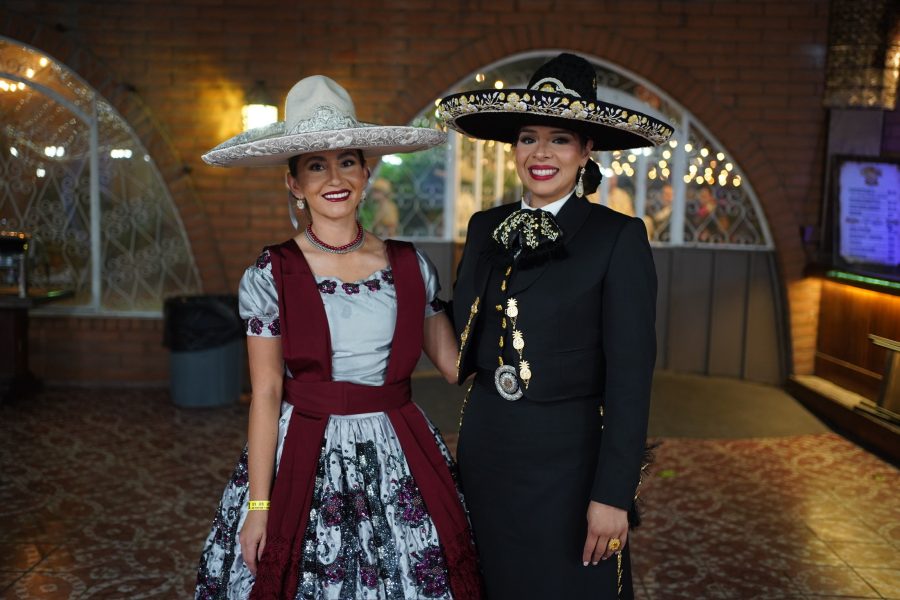
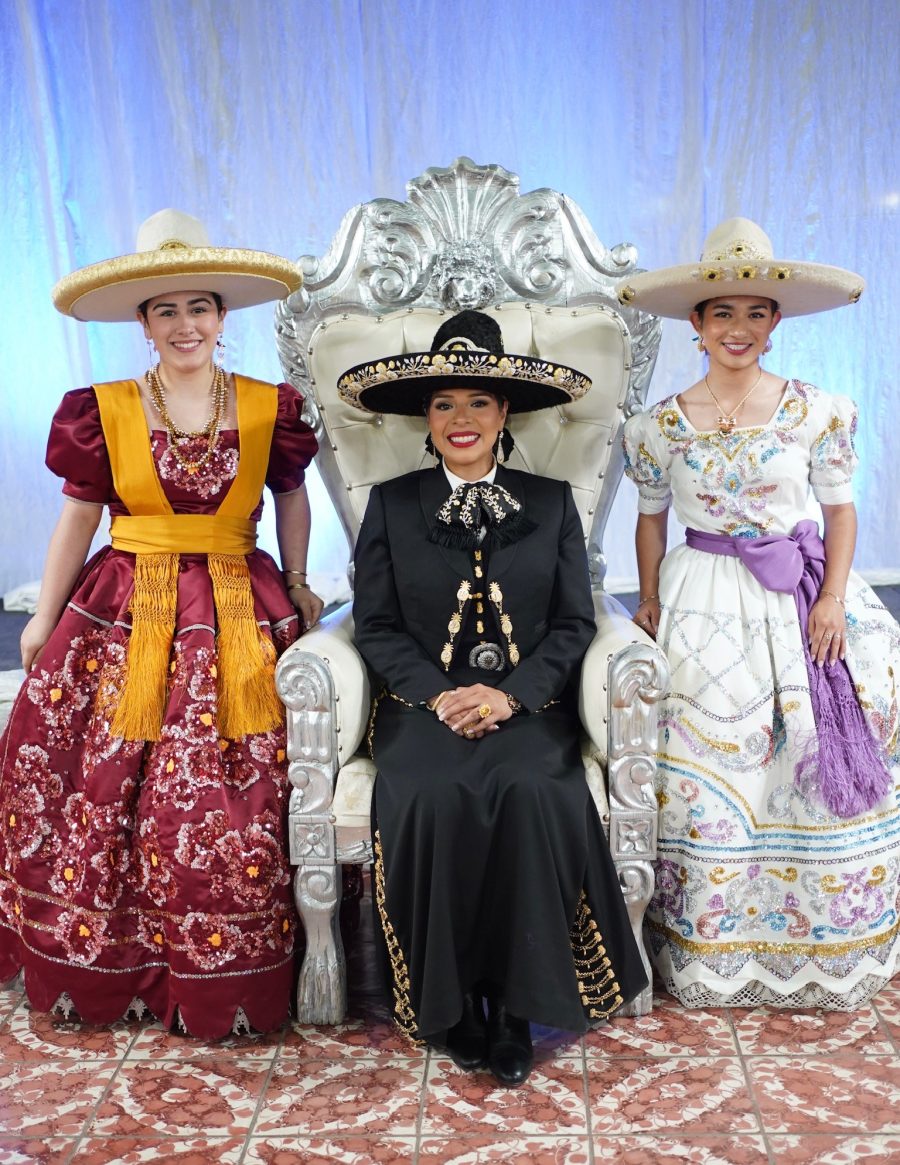
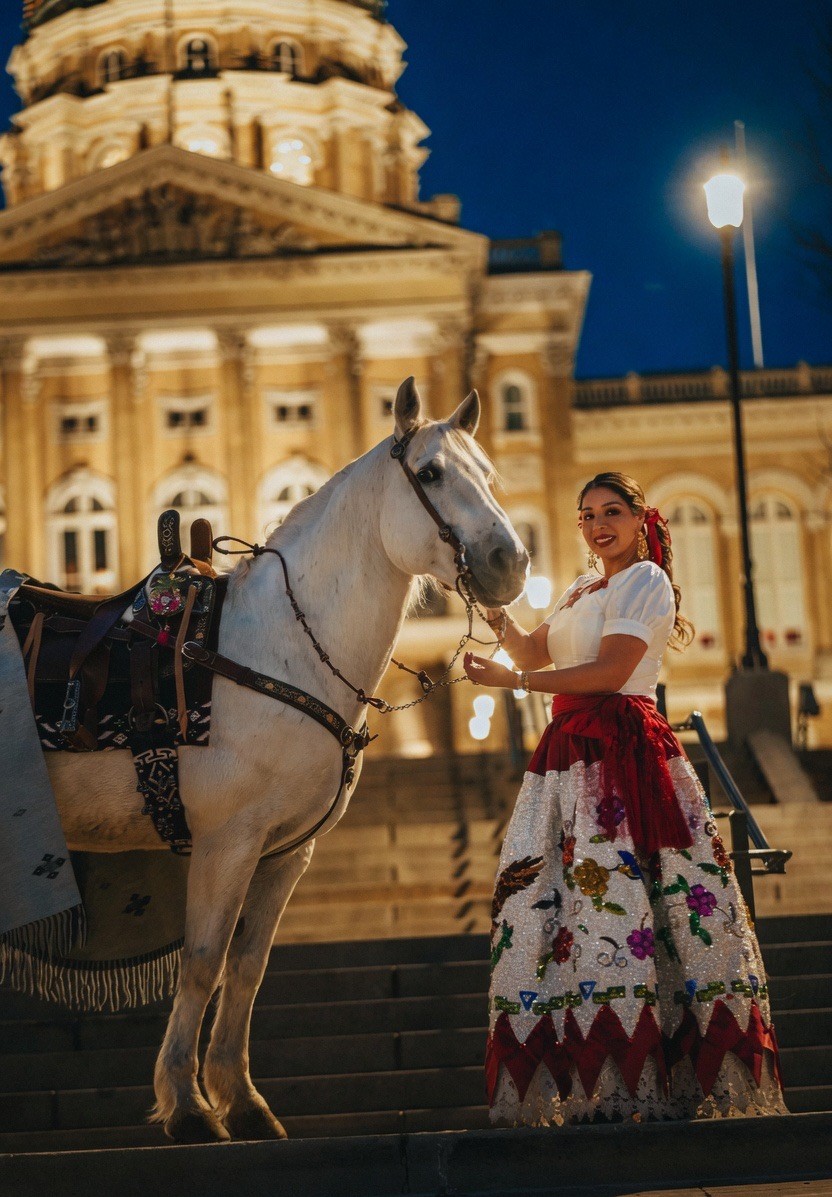
“We do this at full gallop, side saddle. Basically, in those 4 minutes, we do everything that the guys do except we don’t rope,” she said. “We do maneuvers, 360-degree turns, we use 270 turns, 180 turns. We gallop, we do crosses, everything. Everything the men do. And that’s where we truly demonstrate our skills. In Arizona, I had a Queens team of 27 girls in the arena and we all wore an outfit that we call China Poblana, which is where you have a very embellished skirt and a simple blouse. And with that outfit, you usually wear heels similar to like the folklorico dancers.”

“It was amazing,” Piña said. “For us to demonstrate our skills, especially as Americans, because in Mexico they don’t consider us at the same level as them. They were like, look at these Americans, like they’re trying to do what we do but they’re not quite there yet. For us to accomplish that feat and that routine that we did in Arizona was amazing.”
From California to Iowa
Her family moved to Des Moines, where her father had siblings, when she was in 7th grade. An Iowa State graduate, Piña and her parents live in the Des Moines suburb of Pleasant Hill and have their own rodeo arena, with five horses.
She works as a legal assistant in victim assistance in the criminal justice field, and has a flexible schedule to allow her to travel for her rodeo events.
“They’ve been very accommodating to it. My bosses, they just really enjoy what I do,” Piña said. “I just try to give them notice and just get my time off when I can. I give them a heads up, but it’s very surprising that they’re very supportive of it. My supervisor, my director, they’re very supportive.”
There are 18 states with charreria programs, including Minnesota, Nebraska, Illinois, Arkansas, and Kansas, she said.
Piña first became the Iowa queen in 2023, and her dad has been president for the last two four-year terms. “I’ve always been his right hand and his little assistant, and so just for him it’s a little bit easier for me to be the queen because then like I’m always with him anyway, and he’s always with my team, so it just worked out better,” she said, noting she was invited to serve as the national queen.
“I feel like I’ve been at this for a year and it’s only been a month,” Piña said. “My responsibilities are to advocate for and promote charrería in the United States and represent my coordinator. He’s incredibly supportive, helpful, and encouraging. I’ve had several ideas and projects I’ve wanted to pursue, and he’s always been willing to listen and help make them happen.”
“We have a lot of men that are not as open-minded with the women and have that mindset of machismo. My dad could not have that mindset because he has me and my mom,” she said, noting she attends state qualifiers all over the country, and will go to nationals in Colorado Labor Day weekend, and then to Mexico in October.
Piña had a great time in 2023 at the Iowa Horse Fair Show at the state fairgrounds.
“For the Latino, Hispanic community, it’s a huge event. Everybody goes to the Iowa Horse Fair, so we were able to be in the rodeo halftime show,” she said. This Aug. 16, she also will perform again at the Iowa State Fair.
“It’s amazing because for us that live in Iowa, we know the fair is a huge, huge event, and we were seeking this opportunity for many years,” Piña said. “For us to perform at the Iowa State Fair is a huge dream, an honor, a feat to accomplish because to get the invitation to be there, because it’s really hard to get into the Iowa State Fair. For us to perform, to demonstrate what our culture is to the amount of people that go there is insane.”
“You have to be very, very focused, and everything that you do is your connection with the horse, like your body,” she said. “The horse responds to your body.”
Every event, Piña rides a different horse, so she only has less than hour to get used to her horse.
“It is a challenge. I do have my coach that helps me a lot,” she said. “It’s been some slow progress because most of these girls that have been doing this forever have their own horses. They have the capabilities of moving and having trainers and all that stuff.”
To be recognized as the national queen is also a huge honor.
“It’s been the help and the support of a lot of people that have helped me throughout my escaramuza career,” Piña said. “To achieve everything I’ve achieved, I sometimes can’t believe it. It’s just like, it’s been such a blur and it’s just been on the go. It is a huge honor to represent where I’m coming, where I’m from, because I’m from Iowa. I’m from a small state that doesn’t have a big Latino community. We have our own struggles as it is here, and for me to be able to represent and to do what I do is a great honor because it demonstrates that no matter where you come from, as long as you have the mindset and the passion and the goals, you can accomplish anything you want.”
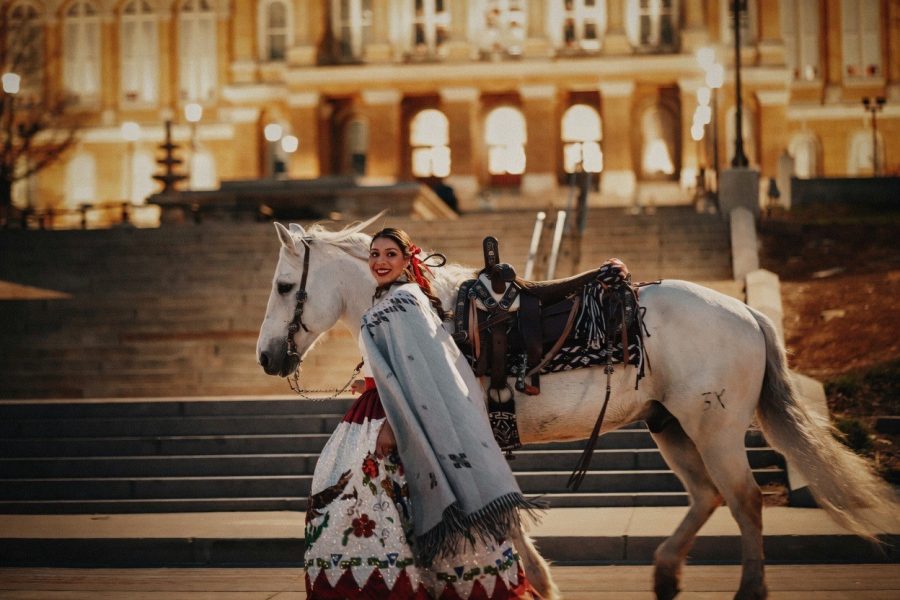
See more photos from Alejandra Piña’s charrería journey in the gallery below.
Stay in the know with stories that matter — visit HolaAmericaNews.com for the latest news, culture, and community updates!
Facebook Comments