
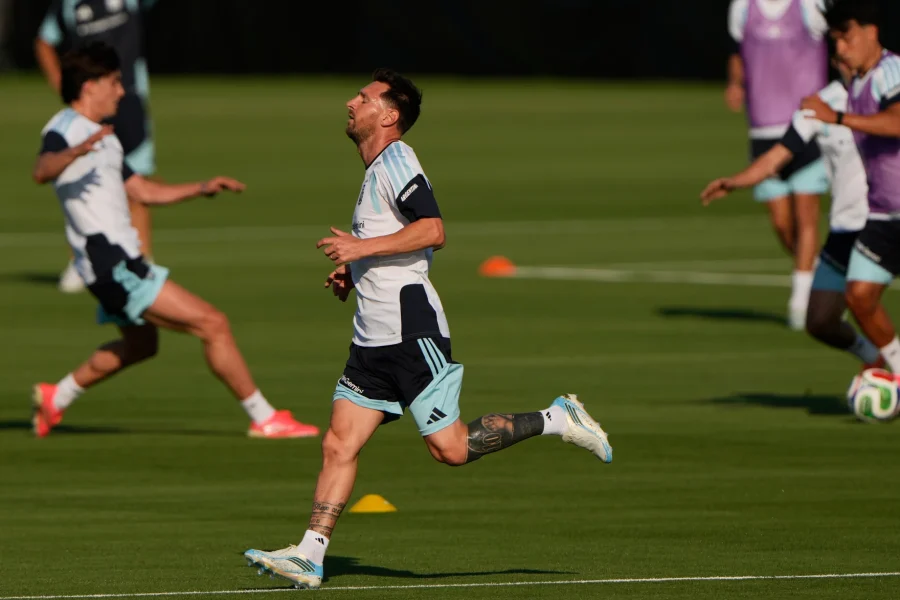



By Gabe Rosenberg, KCUR
Kansas City started the week with temperatures up to 90 degrees and excessive humidity. Almost all of the matches at Arrowhead Stadium are at risk of dangerous conditions. With the tournament and Fan Festival starting Thursday, what is being done to keep athletes and fans safe?
Kansas City’s summer heat is truly no joke — something that international visitors are quickly learning. And if you think this weather is bad, I hate to say it: You ain’t seen nothing yet.

With the tournament officially beginning Thursday, and Kansas City Stadium’s first match scheduled for next Tuesday, soccer fans have been eagerly arriving and exploring the city. The first thing they noticed? It’s grossly hot outside.
To start off the week, the National Weather Service issued a heat advisory for Kansas City, with temperatures hovering around 90 degrees and humidity up to 80% — a combination that feels like you’re walking through a thick, boiling swamp.
These conditions have been closely documented by @sidequestdad on TikTok, a British soccer fan living in Kansas City who’s taken on the role of weatherman for World Cup travelers. (He’s also evangelizing one of our great heat-beating tricks: the Sonic drive-in.)
I remember when I first arrived in Kansas City, exactly five years ago as of next Friday. Following a 12-hour drive from Ohio, we arrived at our midtown apartment just before midnight to find that, despite the sun long disappearing from the sky, it was still 100 degrees outside. Oh, and the air conditioning inside our apartment was broken. We slept in the basement for the first few days.

This type of summer heat is not just uncomfortable, but it’s also potentially dangerous if you’re active and not staying hydrated. Your sweat can’t actually cool you down. And very soon, dozens of world-class athletes will be playing soccer in this environment.
A recent NPR investigation found that one-third of World Cup matches are at high risk of dangerous heat and humidity — including one of Kansas City’s games, the June 25 matchup between the Netherlands and Tunisia.

Another third of the tournament will pose a moderate risk for heat, with caution advised for sensitive groups. That bucket includes four Kansas City games, including the round-of-32 and quarterfinal matches.

This threat isn’t theoretical: Just two years ago, an assistant referee collapsed due to heat illness during an international Copa América soccer match at Sporting Park in Kansas City, Kansas. Temperatures that day were 93 degrees, with 53% humidity — not far from what we’ve experienced this week.
None of these heat problems are new — KCUR has been reporting for years on heat-related deaths and injuries at high school sports practices across Kansas. If one wonders why FIFA would choose such hot places for games, remember that thousands of migrant workers in Qatar died while constructing World Cup venues and infrastructure before the 2022 tournament.
So what is FIFA doing to address the heat this time around? For starters, most of Kansas City’s games start in the evening to avoid the worst of the sun’s spite. All matches will have mandatory water breaks, plus air conditioning on the sidelines for players and staff on the bench.
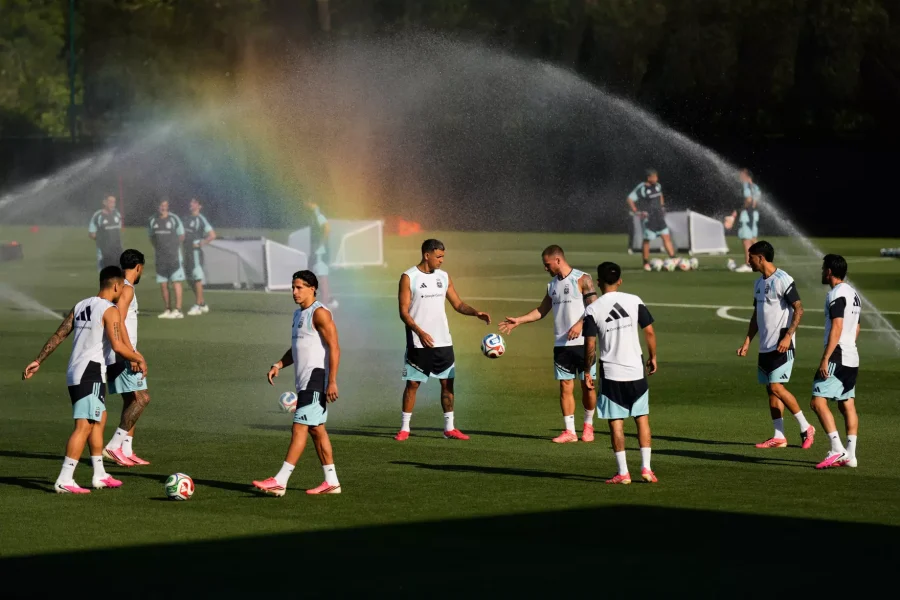
As for spectators, you’ll now be able to bring in “one, soft, plastic, 20 ounces (590ml), factory sealed disposable water bottle” to stadiums. That’s a real turnaround: Just last week, FIFA temporarily banned refillable water bottles from all stadiums, possibly out of commercial interests. The organization instantly received overwhelming criticism from the public and government officials, who pointed out that this was yet another example of FIFA putting fans far below profit.
At Kansas City’s fan fest, a 30,000-square-foot canopy, misting machines and large fans will offer ways to cool off, local organizers told KCUR. Although early looks at the festival grounds show there’s not much shade on that massive, tree-less lawn in front of the stage.
Attendees will also be able to bring in empty plastic water bottles — not metal or glass — and refill them at designated water stations. However, there will only be four stations for the entire festival, which has a capacity of 25,000 people. That math may not add up.
When I head to a World Cup game in a few weeks, I’ll certainly bring the largest permissible water bottle I can. Because after five years of dealing with Kansas City’s summer heat, I don’t play about hydration.
Stay in the know with stories that matter — visit HolaAmericaNews.com for the latest news, culture, and community updates!
Facebook Comments